
Join PMI
Interested in membership? Submit this form for more information.

Dear Colleagues:
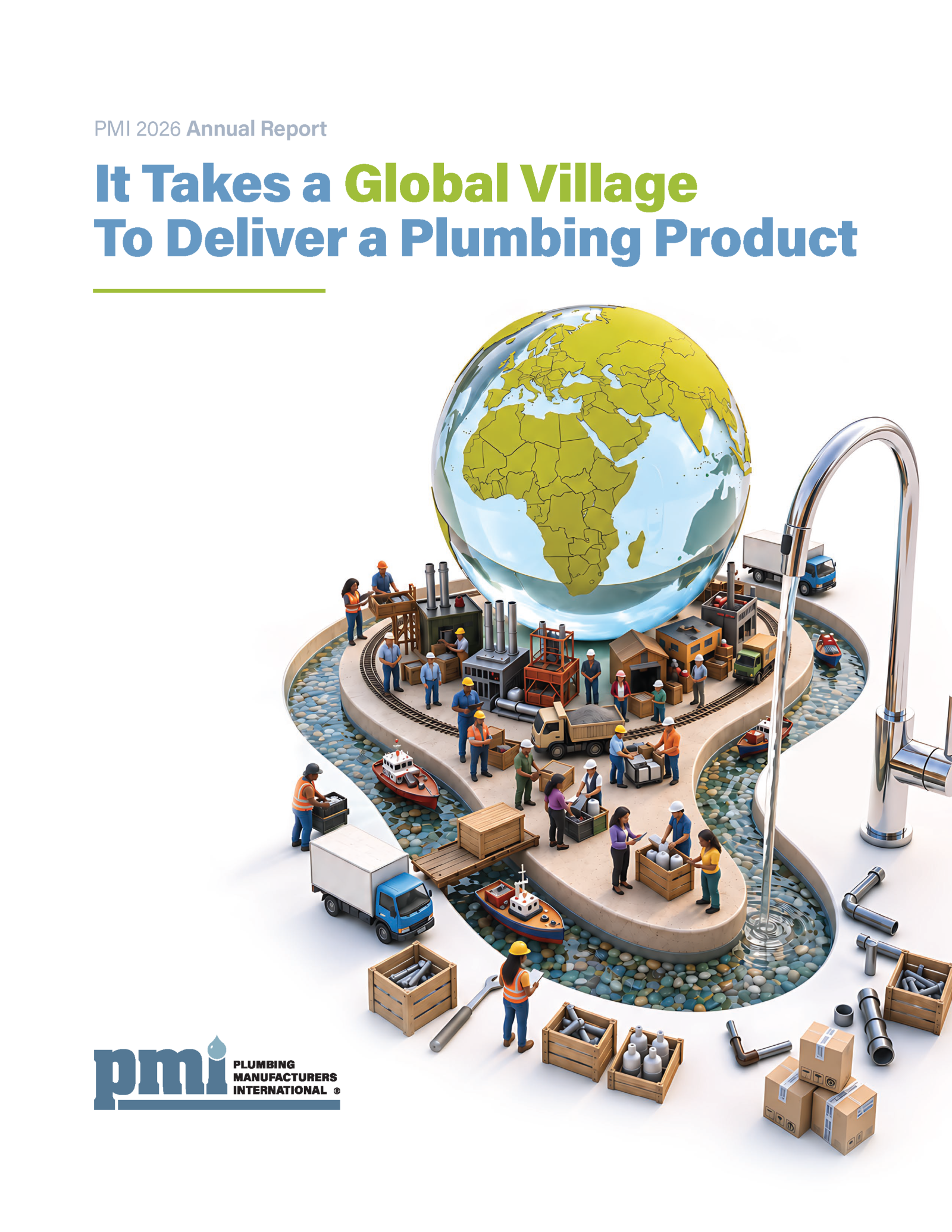
In this report, Plumbing Manufacturers International explores what it truly takes to bring a plumbing product to life on a global scale: the international partnerships, the technology collaborations, the supply chain ingenuity, and the people who make it all work across time zones and cultures. Our theme—“It Takes a Global Village to Deliver a Plumbing Product”—is a story we know your company is living every day.
Representative of PMI’s entire membership, nine PMI members volunteered to participate in interviews that provide a glimpse into their international operations and how they innovate to deliver value to customers and our society each day. You’ll read about:
The report provides visibility to the people and partnerships behind our members’ products and contributes to an ongoing, industry-wide conversation about the future of global manufacturing and trade. We invite you to join the conversation by participating in PMI’s committees, programs and activities.
Sincerely,

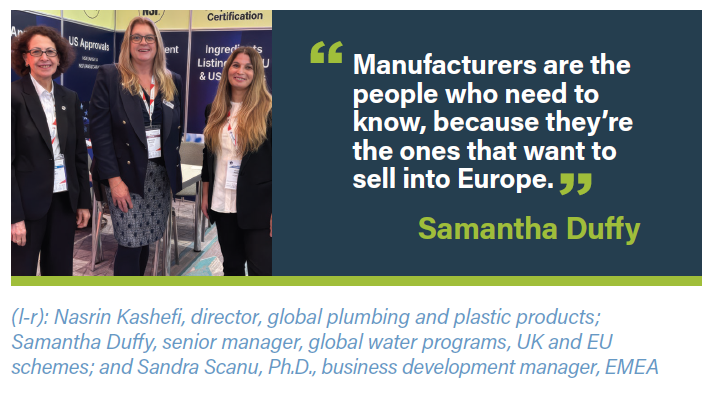
Due to uneven public health protection across the continent, Europe needed to move away from fragmented national approval systems for drinking water. Samantha Duffy, senior manager, global water programs for NSF, participated in the process of developing a single, harmonized framework for the 27-state European Union—the EU Minimum Hygienic Requirements, or EU-MHR.
Speaking from her office on the southern coast of England, Duffy stated that many doubted this harmonization would ever happen. “We’ve been talking about this in Europe for more than 20 years,” she acknowledged. “Many said it’s taken this long, it’s never going to happen. And now it has.”
Making it happen required the participation of all EU member states, various scientific and toxicological experts, manufacturers and other industry stakeholders, testing labs, and certification bodies. “All of these organizations were consulted and brought into the discussion about how this could move forward and make it work across international supply chains, as well,” Duffy explained.
In addition to providing a consistent drinking water standard across Europe, EU-MHR removes internal market barriers for manufacturers, which previously faced duplicate testing and certification. The harmonization will speed innovation and progress toward sustainability goals by replacing separate national systems that were not designed for modern materials or global supply chains, Duffy stated.
The process started with the revision of the EU Drinking Water Directive, adopted as Directive (EU) 2020/2184. A key policy decision in that revision was to move toward the EU-MHR. With this legal mandate completed, the technical compliance will be gradually phased between Jan. 1, 2027, and Dec. 31, 2032, Duffy explained. “That allows the EU to maintain high health protection while ensuring feasibility for member states and manufacturers during the transition,” she maintained.
NSF acts as a bridge between the regulatory intent and real-world compliance, Duffy continued. “While EU-MHR is a regulatory framework, NSF helps translate those requirements into practical, consistent testing and certification programs,” she explained. NSF supports manufacturers by interpreting EU-MHR technical requirements, applying science-based evaluation methodologies, and enabling compliance across global supply chains. NSF provides both testing and certification services, and EU-MHR can be bundled with other certification programs that NSF provides, making for a more efficient and cost-effective offering, she affirmed.
Duffy said she is finding that many organizations to be affected by EU-MHR are “still very much in the dark about this.” She is encouraging organizations to start the process of gaining EU-MHR certification, which can take six to eight months, she estimated. “Whilst I’m working on it for the European standard, I’m communicating on a global basis,” she emphasized. “I’m meeting with manufacturers in China. I meet with manufacturers in the U.S., and with APAC, India, the Middle East, ensuring that as many of those people are aware of what this means and what the impact will be. They’re the people who need to know, because they’re the ones that want to sell into Europe.”

Speaking from Haws’ manufacturing facility in Switzerland, Kathryn Loos, the company’s Nevada-based vice president of marketing and product management, related a story that represents the global reach of the manufacturer of drinking fountains and water coolers, water bottle fillers, emergency eyewash and eye/face wash stations, and overhead tank safety showers.
A Norwegian engineering firm working on a large-scale industrial project in Brazil contacted Haws through its North American website to start the process of having safety equipment shipped through the firm’s distributor in Singapore to be installed in Brazil. “(This order) literally touched every single one of our regions,” Loos remarked. Haws has offices in Singapore and Brazil, in addition to Nevada, Switzerland, India and United Arab Emirates. “In those types of scenarios, our team will work collectively to figure out the right product and then manage language and time zones.”
Regional sales leaders are key resources for Haws’ global teams on these types of projects, Loos explained. They help to determine “what’s the best way to execute the project, where’s it going to be fulfilled from, and where does the customer get allocated to? They have a great global mindset of what’s going to be best for the company versus maybe just serving one region,” she affirmed.
Having offices in multiple locations allows Haws easier access to vendors around the world than making this effort remotely or from a single location, Loos declared. The same advantages apply to having a diverse, global supply chain, which gives Haws access to more geographies, especially now with its recent acquisition by Watts Water Technologies. “If there’s a product that we need to cost out or a part that we need to do prototype testing, we generally are able to use regional offices to participate in that,” she explained.
As it works to market, sell, distribute and install its products around the globe, Haws must be aware of local site specifications around access to plumbed water; these specs are variable, depending on the type of facility and environment. “That’s generally where there’s quite a bit of complexity that comes into play,” Loos acknowledged. “As you can imagine, a wastewater treatment plant would be very different from a food manufacturing or an oil and gas facility. Working in the Middle East, the environments are extremely hazardous and challenging, with specifications around corrosive protection and corrosive materials, and then obviously the water temperature piece is a big one,” she stated.
North America remains Haws’ largest market, fueled by diverse industries, code requirements for its products in new construction, and demand to repair and replace products in existing buildings. In the U.S., “there’s a consistency around compliance and certification requirements” versus in Europe or Latin America, where each country may have different requirements, if any at all, Loos explained. Haws also is active in the Middle East, where construction booms continue, particularly in Saudi Arabia and Qatar.
Keeping a global team working across various time zones, languages and cultures can be a challenge, Loos stated. “Having a regular cadence of meetings is important, as well as flexibility from team members as far as timeframes when they’re available,” she emphasized. “We’ve implemented a structured meeting format internally that has a set agenda that you roll through every single time and a system that documents all of the issues and topics, and provides an automated summary for those who attend it,” she continued. “It provides everybody access to the same forum and accountability to participate in meetings. That works well across all the different regions to have a standard guideline of how we communicate internally.”
Many Haws team members don’t have a work schedule one might consider normal. “Our project management team on the West Coast will hold meetings at 4 a.m. with Middle East customers. They are the glue that allow us to execute so seamlessly with some of the projects that are coming out of North America or Europe into the Middle East,” Loos affirmed. Having tools and access to be able to work remotely and communicate globally is critical, she added. “We say that the sun never sets on Haws. Somebody’s always awake in one of our regions.”

Rethinking its supply chain in response to the cost of tariffs was a fundamental challenge for LSP Products, headquartered in Irving, Texas. With its manufacturing facility in Monterrey, Mexico, and a team in Asia responsible for sourcing materials, LSP put together cross-functional teams to find the best solutions for the business.
“Due to the rapidly changing environment, we had to pivot and turn our focus to mitigating risk for the business. We had to pivot to a full-on focus on tariffs,” recalled Paige Riddle, LSP’s senior director, product management, and a member of the PMI Board of Directors. LSP makes washing machine and ice maker outlet boxes, as well as connectors, valves, rough-in kits, roof drains, and various kinds of plumbing supplies.
The teams analyzed three primary factors: supply chain diversity, product materials, and customer satisfaction, Riddle stated.
Reducing risk by sourcing materials from different countries can reduce the cost of tariffs, Riddle explained, and “is one component of a sourcing strategy. Supply chain decisions are multifaceted and rarely straightforward. Moving items between countries may introduce additional costs, and the lowest tariff option is not always the best option.”
LSP’s teams took a fresh look at the materials going into their products and questioned whether or not some materials could be substituted. “We had the sourcing team working with suppliers, the engineering team evaluating different materials, and the product and sales teams evaluating alternatives and assessing customer requirements,” Riddle stated.
LSP’s entire team focused on ensuring any changes continued to meet codes, standards and performance requirements, and were acceptable to customers. “Meeting customer requirements was a key part of the process to ensure their needs were met,” Riddle said.
She named LSP’s director of sourcing Carlos Caceres, director of engineering Ben Sampson, and sales director Eric Lane as key team members who worked through the challenges.
Having people on the ground with regional expertise, whether that was in Asia and Mexico, was advantageous. LSP was able to assess impacts and gain additional insights to make informed decisions, Riddle asserted.
“Face-to-face engagement and making a human connection is a huge advantage to navigate challenges together,” she continued. “Maintaining close connections with teams and partners improves collaboration and supports better decision-making during periods of change.”

In the United States, the need to save water is particularly acute in the southwestern part of the country, where water shortages exist. With showering representing about 25% of a household’s indoor water use, Kohler saw an opportunity for a recirculating shower that can reduce water usage by up to 80% with the turn of a switch.
Introduced at the 2026 Kitchen and Bath Industry Show (KBIS), Kohler’s Anthem EvoCycle Smart Shower enables users to take a relaxing shower while reusing and thereby conserving water. Like any shower, it uses 100% fresh water in standard mode. “By switching it to recirculating, you’re now only using a half gallon of fresh water a minute while still experiencing a 2.5 gallon per minute (gpm) shower experience overall,” explained Ryan Leichty, Kohler’s senior director of engineering, sanitary, who led the development of the product. With the hand shower always producing fresh water, each person in a household can choose to use the handshower or overhead shower with recirculating water according to their preference, he added.
Developing the shower required the expertise of several Kohler teams and manufacturing facilities, as well as partners. “We used resources from all over the globe to make this happen,” Leichty stated from his office at Kohler’s Wisconsin headquarters. The teams used remote communication tools and common computer-assisted design platforms to make progress 24 hours a day, he added.
Up to five Kohler manufacturing facilities contributed to the product, Leichty estimated. Kohler collaborated with PMI member IAPMO in the development of industry standard IGC 330 recirculating shower systems. A partner company developed a built-in ozone cleaning module that automatically cleanses captured water and sterilizes the plumbing after each use. Kohler teams in England, Asia and various facilities in the U.S. developed the shower’s electronics and contributed valves, the product’s base, and other components. All components ended up in Kohler’s DeSoto, Texas, facility for assembly, packaging and distribution.
Outside of the water itself, the product uses no additional consumables, such as a filter or cartridge, Leichty emphasized. Also, it was intentionally designed to look like a normal shower, enabling customers to use Kohler’s entire portfolio of shower components with it. This customization and flexibility “will aid in adoption of this type of product,” he added.
Leichty credits the many people who contributed to the shower’s development, starting with Kohler’s marketing team. “There were opportunities where we needed to decide, are we going to do this or not, right?,” Leichty recalled. “This team believed in the product. While the product took some time to develop, they stuck with it.”
Kohler’s North American showering group led the product’s development from an engineering perspective. “They spent a lot of time making sure the product worked without glitches, trialing it in people’s homes, and following up to make sure the product functioned like we would expect,” Leichty affirmed.
Kohler’s human factors team performed testing that was critical to developing product features such as the user interface and “making it a great user experience overall,” Leichty emphasized.
In addition, several other key team members collaborated across functions and geography to bring this innovative product to market.
Marketed and sold through Kohler’s regular distribution channels in the U.S., the new product will likely be available elsewhere soon. “We’re targeting regions where water costs more for people and where there’s a financial incentive to use a product like this,” Leichty declared. “Saving water is something that continues to trend, and it’s part of Kohler’s mission to drive sustainability through our products and deliver those solutions to customers.”

For TOTO’s Fernando Fernandez, the rewards of his work “start with the simple fact that I like what I do.” The company’s vice president of codes and standards declared that “there’s never a dull moment” and credited his enjoyment with the opportunities he has to engage with stakeholders, both inside and outside the TOTO organization.
Working within an industry very aware of the need to preserve water resources but also cognizant of the adverse public health and infrastructural consequences of aggressively reducing flow rates, Fernandez said the education that occurs through collaboration with stakeholders leads to the best solutions. “That’s the rewarding part—finding how you balance that approach, right?,” he affirmed. “How can you be a good steward for water resiliency, yet provide caution to not go over that tipping point?”
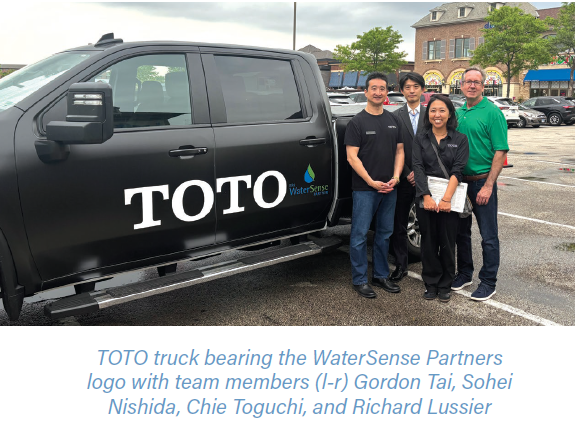
A former PMI Board of Directors president, Fernandez is very proud of PMI’s role in establishing the Environmental Protection Agency’s WaterSense program. He has been actively celebrating the program’s 20th anniversary this year, passing out “Happy 20th!” t-shirts with the WaterSense and TOTO logos. “It’s a great milestone. The industry collaboration continues to be phenomenal, well-organized with full support all the way around,” he emphasized.
As TOTO and the rest of the plumbing manufacturing industry press innovation forward, Fernandez has been working on product lines including the Neorest toilet, which is sourced and marketed globally. Starting during the COVID pandemic and continuing afterwards, TOTO shifted to multipoint sourcing to avoid supply shortages. In addition to creating efficiencies in its supply chain, TOTO looked at how to expand production in the future, moving away from traditional, single-point methods of manufacturing processes and toward localizing production where the products are sold, he explained.
Having ceramic production facilities in Mexico, India and other Asian locations, and the United States—including a new one in Morrow, Georgia—facilitates this strategy. “Having a physical presence and employing local country team members in each geography that we move into globally has helped TOTO flourish,” asserted Bill Strang, TOTO USA’s president of corporate strategy, ecommerce, and after-sales consumer experience, and member of PMI’s Strategic Advisory Council.
The $240 million Morrow factory uses AI camera technology that makes its robotic assembly line agile enough to run many different models on the same conveyor line. TOTO tracks the DNA of each toilet with a QR code to collect data on each step in the assembly line process to track and record qualitative and quantitative information for the future, Strang stated.
Collaboration internally at TOTO has led to innovations such as the Washlet integrated toilet including a bidet, as well as the company’s Cefiontect, a ceramic glaze that creates a slippery, non-porous toilet bowl surface that’s easier to keep clean; Tornado Flush that creates a centrifugal rinsing action; and the Integravity flushing platform, which uses a dual-tank, dual-valve architecture that sequences the flow of water rather than dumping it all at once.
In developing these innovations, TOTO borrows design elements from nature, Fernandez explained. “It’s the way the water flows through a trap way, how to minimize turbulence, voids or pockets of air that reduce the siphon power, we borrow from nature. And we look to optimize those natural features to meet consumer expectations and water-efficiency standards in our overall approach to sustainability, which is at the heart of our DNA,” he declared.
A pioneer in developing environmental product declarations, TOTO continues to assess the environmental impact of its supply chains, production methods, distribution, and recycling/reuse to conserve water and energy. “It’s part and parcel of how we operate and identify ourselves as being a leader,” Fernandez emphasized. “We intend to remain on the cutting edge of sustainability.”

Sloan announced an investment in Essel Bath Fittings Pvt. Ltd., a manufacturer headquartered in India, further advancing the company’s strategy to expand its localized manufacturing.
The investment reinforces Sloan’s long-standing global approach: manufacturing and assembling products close to the customers it serves. This strategy enables faster response to customers, reduces transportation impact, and tailors products to regional needs across North America, Latin America, the Middle East, Southeast Asia, and India.
“This investment allows Sloan to bring our expertise to Essel while continuing to grow responsibly on a global scale,” said Graham Allen, Sloan president and CEO. “Local manufacturing doesn’t just strengthen our supply chain—it supports sustainability, reduces carbon impact, and better serves our customers.”
The investment supports Sloan’s “make-it-where-you-sell-it” philosophy by expanding local manufacturing to serve domestic demand in India and in select export countries in Asia, the Middle East, and Africa. Manufacturing closer to end-customers significantly reduces long-distance shipping and associated emissions, directly contributing to Sloan’s global sustainability goals, the company stated.
The partnership also brings Sloan’s engineering expertise and technology leadership into the manufacture of Indian bath fittings, said Parthiv Amin, Sloan’s global chief sales and marketing officer. Sloan holds more than 400 global patents for innovations in water efficiency, sensor-based systems, and commercial-grade performance. These capabilities will be integrated into Essel’s product development, raising quality, durability, and efficiency standards across the portfolio.
“This strategic investment brings together Sloan’s global expertise in innovation and water-efficient technologies with strong local manufacturing capabilities in India,” continued Amin. “Aligned with the ‘Make in India’ vision, we are focused on delivering high-quality, sustainable solutions that are tailored to the evolving needs of Indian consumers while contributing to responsible water usage and long-term environmental impact.”
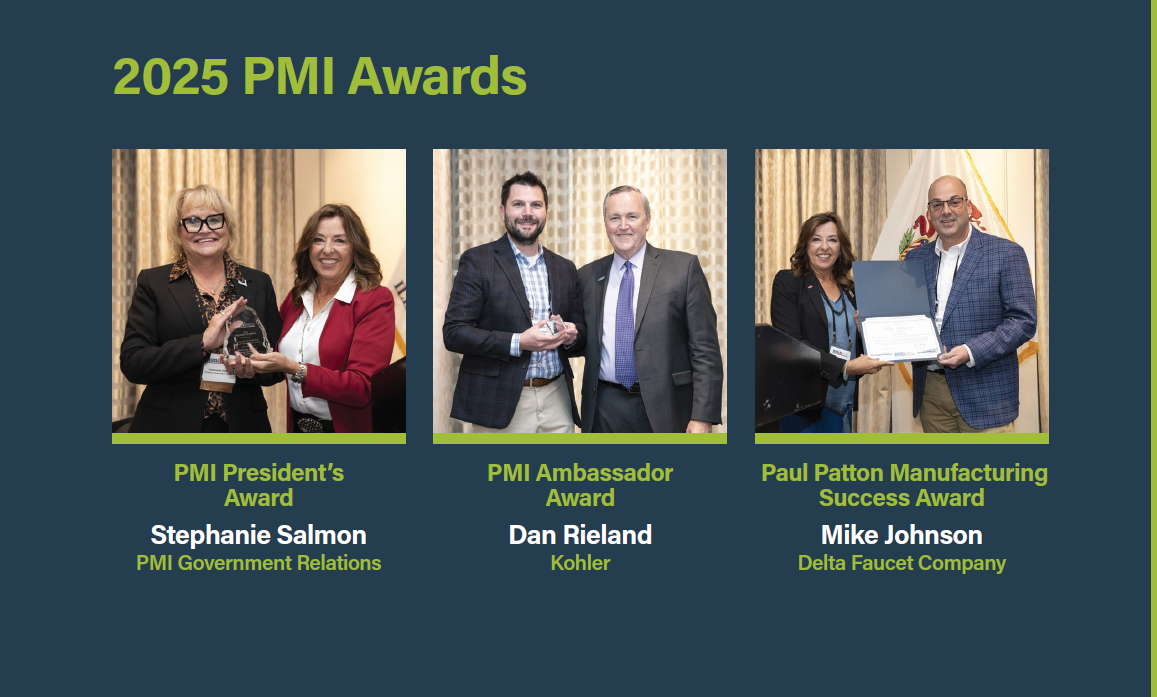
Every year, PMI and its members work together to advance the plumbing manufacturing industry. Member engagement with PMI—this continual loop of listening to and learning from each other translated into action—contributes to the successes described in this report’s nine case studies.
The individuals who participate in PMI’s committees, programs and events transform this engagement into accomplishments that save members significant costs relating to manufacturing and regulatory compliance. Here is a rundown of recent accomplishments:
PMI successfully persuaded U.S. House legislators to include language in the Home Appliance Protection and Affordability Act providing manufacturers five years to adapt products after a standard is amended or revoked. PMI continues to meet with Senate staff to highlight concerns about revising federal water-efficiency standards.
PMI has contested the proposed Department of Energy rule to change the current federal faucet flow rate standard of 2.2 gallons per minute (gpm) at 60 pounds per square inch (psi) to 2.5 gpm at 80 psi. The DOE has taken no action to date, after hearing concerns about the rule from PMI and other organizations. PMI’s efforts also helped protect the budgets of the Environmental Protection Agency, National Institute of Standards and Technology’s plumbing research, and the WaterSense program, which now has saved about 10 trillion gallons of water through more than 46,000 WaterSense-labeled products.
In California, PMI advocated for moderation in proposed flush volume regulations. The state had proposed lowering all flush volumes from the current 1.28 gallons per flush (gpf) regulation to 1.1 gpf, but after outlining potential issues and obstacles to the California Energy Commission, PMI received confirmation that the CEC was pursuing a two-path approach, one for dual-flush toilets and another for single flush. For dual-flush toilets, the CEC will advocate for lower flush volume (0.9 gpf for light flush and 1.28 for full flush). The CEC plans to issue a staff report and finalize the regulation for adoption by the end of 2026.
Through visits to state capitols and attendance at key legislative events, PMI is encouraging policymakers to support skilled trades workforce development, “filter first” laws to ensure clean drinking water in schools, and efforts to increase housing supply. PMI shared policy priorities with legislators and other officials in meetings convened by the American Legislative Exchange Council, Council of State Governments, National Conference of State Legislatures, and National Governors Association. In addition, PMI continues to assist members in complying with PFAS laws and extended producer responsibility for packaging while advocating for science-based legislation with achievable objectives on these matters.
Plumbing manufacturing’s premiere event, the PMI Manufacturing Success Conference, connects PMI members with inspirational speakers and experts on issues facing the industry. PMI also provides members with opportunities to develop professional skills and bring insight back to their workplaces. These offerings include the PMI Inspiring Leaders Program, PMI Market Outlook LIVE, Women of PMI, and webinars on topics including Canada’s federal plastics registry, confidence building, congruent leadership, effective communication skills, overcoming hesitation, product compliance, tariffs, and work by design. Matt Godish, PMI’s new digital services manager, makes these webinars engaging, timely and accessible.
Building upon a media strategy focused primarily on members and industry allies, PMI has expanded its social media effort, with public-facing “Rethink Water” messages for those interested in kitchen and bath products and related topics. The PMI communications team has stepped up its use of video, now engaging social media influencers Nate Soetaert (@natesoetaert.realestate, 22.8K followers on Instagram) and Courtney Jacobs (@courtneyjacobs.home, 159K followers on Instagram). PMI’s presence on LinkedIn, Facebook, Instagram, and TikTok brings messages about water efficiency, opportunities in the skilled trades, ensuring safe and clean water, legacy product replacement, avoiding counterfeit products, and other important issues to new and influential audiences.
To show the economic impact and symbiotic relationship between the plumbing manufacturing and plumbing industries, PMI added data about the plumbing industry to its economic impact report. Members can create customized reports showing these data to elected officials. These data can be sorted by industry; by direct or total economic impact; by state; and by congressional, state house, or state senate district. The total economic impact of both industries—including suppliers to the industries and household spending by employees of the industries and suppliers—is $442.5 billion, 1.7 million jobs, and $142.1 billion in wages. For plumbing manufacturers alone, the total economic impact is $129 billion, 500,487 jobs, and $37 billion in wages.

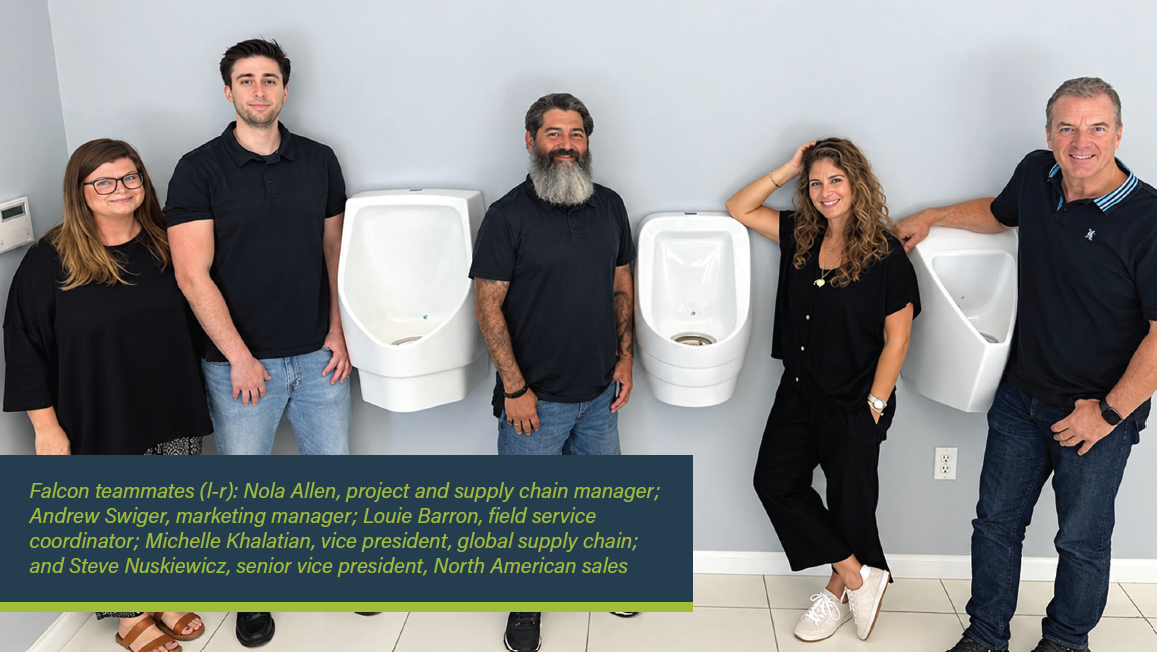
A global company with an outstanding reputation as an original equipment manufacturer (OEM), Falcon Water Technologies is not a widely recognized consumer brand. But that hasn’t stopped the company from having its products installed in places like Dodger Stadium, Los Angeles Memorial Coliseum, Walt Disney Concert Hall, Taj Mahal, London Heathrow Airport, and Barcelona Football Stadium.
From its Los Angeles headquarters, the company choreographs the manufacture and distribution of commercial products including water-efficient, waterfree and touchless urinals—as well as cartridges and other components—to North America, Europe, Asia, Australia and South America.
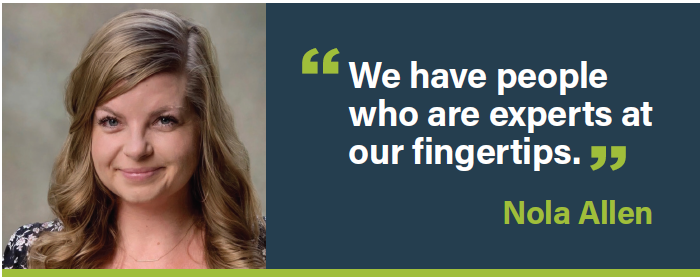
“People care about water saving and the environment and that’s on people’s minds when they have new construction or are looking to retrofit existing restrooms,” observed Nola Allen, Falcon’s project and supply chain manager. “We’re installed in a variety of locations with high usage that have several bathrooms and urinals, like stadiums, schools and airports, that benefit from using our products.”
Falcon’s products are manufactured at locations worldwide. “This allows Falcon to work with the best at what they do, regardless of where they’re located,” Allen stated. “We have found the best companies to produce our products. We’re able to pick and choose who we want to work with. And because we’ve opened ourselves up to the world, we have people who are experts at what they do at our fingertips.” In her job, Allen manages the European supply chain and inventory. “If an issue arises in the supply chain, because of our company size, we are able to react quickly and efficiently,” she asserted.
In addition to water-efficient and waterless urinals, Falcon produces a hybrid urinal, which was created for locations where water must be used but can be greatly diminished, she explained. Falcon has begun to market a urinal conversion system on Amazon under its own brand. The system turns traditional urinals into water-efficient, touchless systems. “This is our first venture in selling a product through this channel,” Allen stated, “and we definitely want to put our best foot forward.”

With a primary goal of reducing Scope 1 and 2 emissions by 63% by 2035, GF Building Flow Solutions has created an integrated global sustainability organization with local responsibility, stated Kate Olinger, senior director, regulatory, sustainability and external affairs, GF Americas, from her office in Minnesota.
Having acquired Uponor in November 2023, GF has had global and local sustainability goals for many years, but there was “limited interaction” between global and local across previous divisional boundaries, said Olinger, a PMI Board of Directors member. “In 2026, we saw the kickoff of our new strategy cycle that will carry us through 2030 as a global and unified GF organization. It’s important to have a regional and local focus because sustainability happens at every single plant. As a result, it’s fostered teamwork, engagement and excitement in the organization,” she affirmed.
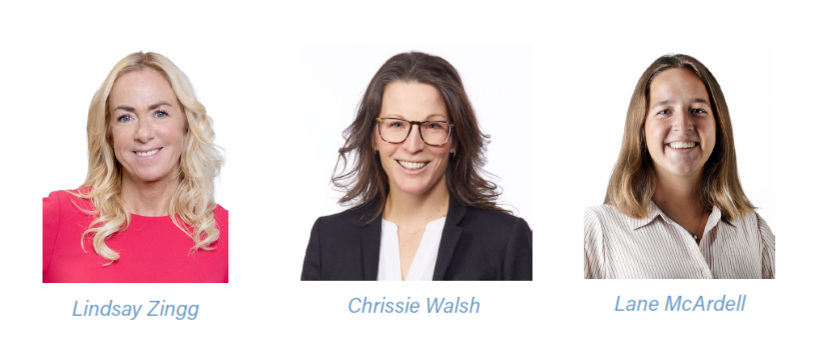
Led by Lindsay Zingg, GF’s chief sustainability officer who is located in Switzerland, the initiative has goals relating to four Ps: products, planet, people and partnerships. The goals include providing social and environmental benefits through 80% of their products, recycling 80% of their waste, reducing the lost-time injury frequency rate by 30%, having 30% of management positions held by women, and collaborating with the top 10 priority suppliers to accelerate emissions-reduction initiatives. Key North American team members are Chrissie Walsh, regional head of sustainability, Americas, and Lane McArdell, sustainability specialist.
As a result of this refocused capacity, the regional sustainability team is empowered to drive sustainability impacts collaboratively, while enhancing organizational communication and awareness of valued sustainable action, Olinger explained. One sustainability project involves a pipe packaging innovation that reduced material costs, waste and emissions, saving $25,000 a year including reduced natural gas usage. Other projects include converting a propane-driven forklift fleet to electric, replacing plant lighting to reduce emissions, and having a global sourcing team representing all GF locations when negotiating with suppliers.
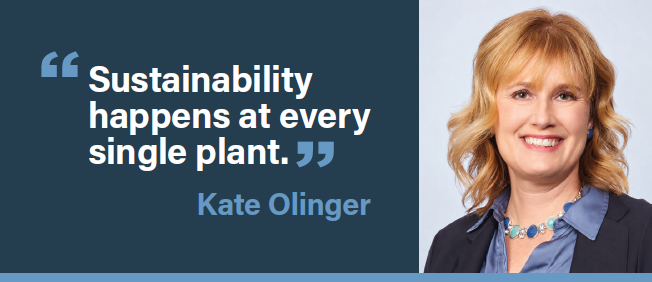
Getting the sustainability team involved early is key. “If you’re putting a new chiller on the roof, having the sustainability team involved early on may slightly increase costs due to recommended technology upgrades, but you’re going to get a big sustainability impact when you integrate into conversations already being had towards renewal and needed maintenance,” Olinger declared. “In the past, sustainability often was pulled in towards the end when the quotes were already completed, and it could result in significant rework and cost to incorporate the potential sustainability gains. We’ve been working hard over the last year to build those partnerships locally, have those discussions early on, and lower the cost of sustainability.”
Olinger’s involvement in this initiative relates with her job responsibilities well “because in our industry, sustainability is largely driven by regulatory and legislative requirements. Having all three of those teams (regulatory, sustainability and external affairs) working together helps give the sustainability initiative the expertise to be effective,” Olinger stated. She added that extended producer responsibility laws have accelerated GF’s efforts.
“The main advantage of collaboration is access to experts around the world,” Olinger asserted. “It also has brought fresh perspectives for new products and initiatives to the table.”
A core belief of BLANCO is that the kitchen is the functional and emotional center of the home. “Our mission is bringing joy to people in their homes and kitchens every day,” affirmed Alana Stevens, CEO of BLANCO North America.
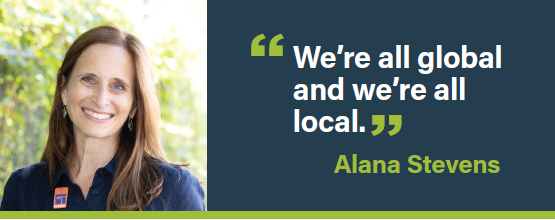
Leading a North American business that spans production facilities and logistics networks in the United States and Canada, while collaborating closely with BLANCO colleagues headquartered in Germany and around the world, Stevens does not distinguish between global and local teams. “We’re all global and we’re all local,” she emphasized. “Both the local team and global teams are here to support our customers and leverage the best of our partners around the world to make it happen.”
Every BLANCO process—ideation, incubation, product development, research and development, commercialization, supply chain, quality and more—has global and local voices. “Every perspective matters to ensure success,” Stevens declared.
The development of BLANCO’s Inteos kitchen workstation for North America is an example of how these voices came together to create a product that won a Red Dot Award in BLANCO’s 100th anniversary year.
After listening to customers during the ideation phase, BLANCO’s global and local teams began to develop a workstation sink that was both expansive and visually refined, delivering what Stevens describes as “an object of beauty and function that you can have as the centerpiece of your home.” The sink comes in sizes ranging from 30 to an impressive 45 inches. “It’s large enough to sit in,” Stevens remarked. The workstation simplifies workflow, including a cutting board, colander, and various optional accessories that fit into the sink, such as oven-safe trays and a dish rack, which can be neatly stacked to the side or put away into under-sink storage.
Creating a large product that takes up significant space to produce what Stevens calls a “homemade chef experience” requires the customer’s voice to be heard and respected during the ideation phase, Stevens explained. “BLANCO focuses very much on the ‘why’, which is how we bring joy to people, the ‘what’, which is our product solutions, and then the ‘how’, which is about innovation and the team that comes forward to deliver that,” Stevens stated. As a premium design provider, BLANCO markets its products extensively to architects, interior designers, builders, and other professionals, as well as directly to consumers, Stevens added.
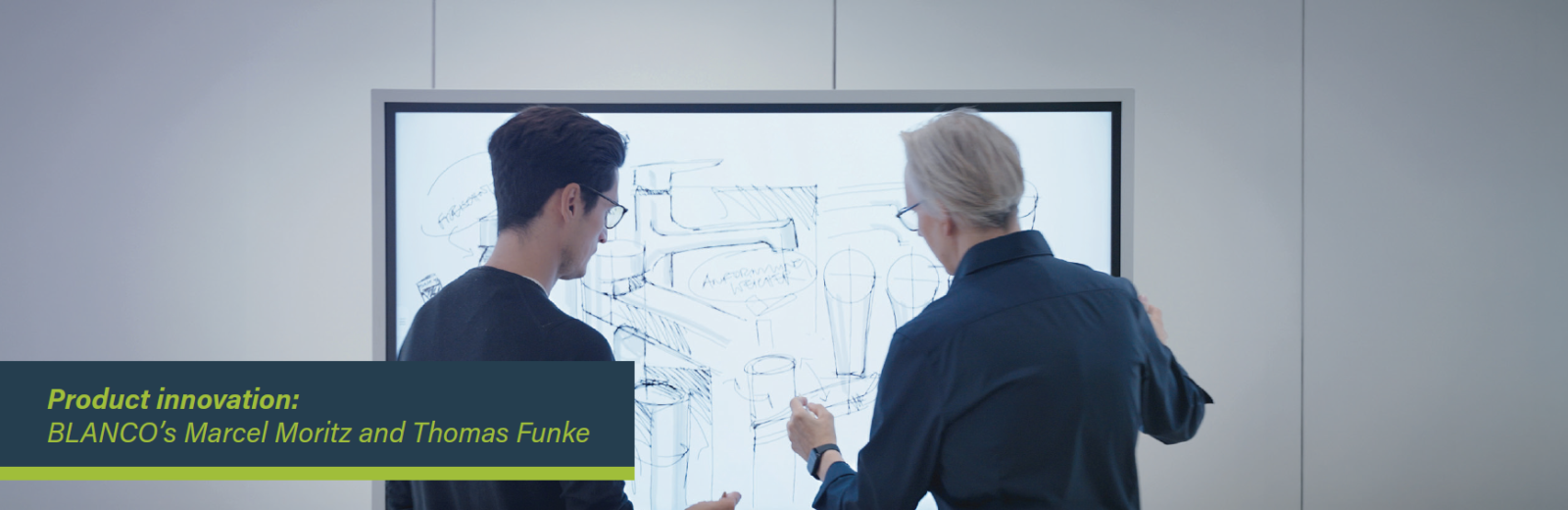
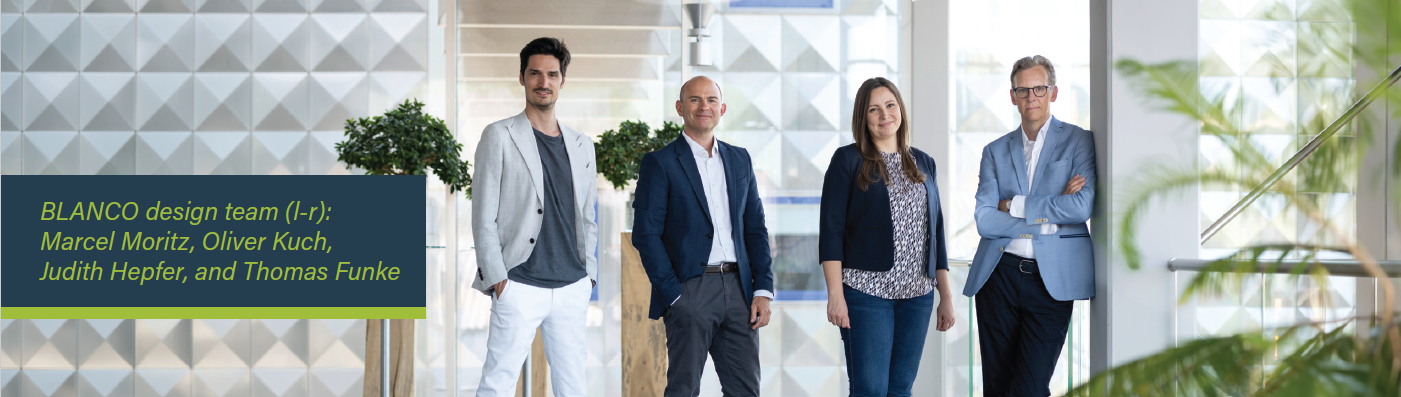
Among the team leaders who worked on the Inteos collection are the local product team Lars Christensen and Tim Maicher, vice president and head of global products Ragner Jehle, global head of design and innovation Marcel Moritz, vice president and head of global research and development Philipp Hunger, and director of manufacturing at BLANCO Canada Thomas Schuette. “Their amazing teams brought forward the BLANCO design DNA and married form and function together,” Stevens emphasized.
These collaborators meet often on Microsoft Teams and, if not working at the same location, meet in person at least once a year. “In-person sharing builds a culture of trust and respect to make all those other things move a lot faster,” Stevens declared. “There is a concentration of employees in Germany, as you can imagine, because that’s where we’re headquartered. However, they love coming into the various countries we serve, which is great and valuable; it helps build a truly global culture.”
In North America, team members are located in places including Toronto, New Jersey, New York, Florida, and Texas. “Every month, we have a team meeting,” she stated. “We have multiple in-person meetings. We have town halls. There are a lot of opportunities for togetherness even though, for the most part, it’s mostly hybrid.”
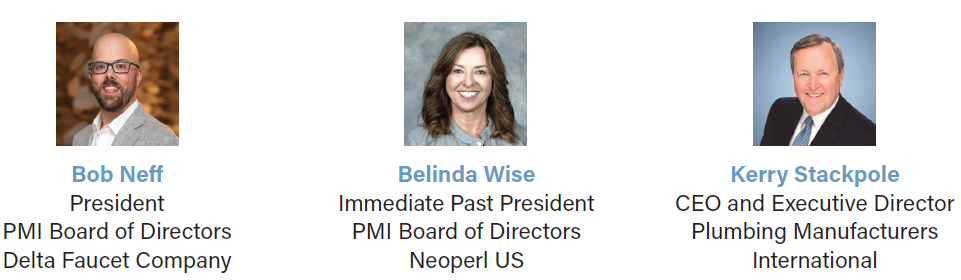
Bob Neff, Delta Faucet Company
President
Lowell Lampen, Kohler
Vice President
Paige Riddle, LSP Products
Secretary-Treasurer
Belinda Wise, Neoperl US
Immediate Past President
Troy Benavidez, LIXIL
John Confrey, Falcon Water Technologies
Tim O’Keeffe, Symmons Industries
Kate Olinger, GF Americas
Erin Beyer, Delta Faucet Company
Shawn Oldenhoff, Kohler
William Strang, TOTO USA
Claude Theisen, T&S Brass and Bronze WorksErin Beyer, Delta Faucet Company
Mike Johnson, Delta Faucet Company
Martin Knieps, Viega
C.J. Lagan, LIXIL
Will Wang, Fluidmaster
Kerry Stackpole
CEO/Executive Director
Jodi Stuhrberg
Director of Programs and Administration
Kyle Thompson
Technical Director
Matthew Windrum
Director of State Government
Affairs, Policy and Advocacy
Matt Godish
Digital Services Manager
Ann Geier
Administrative Assistant
Ray Valek, John Wohlt and Judy Wohlt
Interested in membership? Submit this form for more information.