

April 2026
From Disruption to Direction: How PMI Helps You Navigate Geopolitical Risk
 By Kerry Stackpole, IOM, FASAE, CAE, PMI CEO/Executive Director
Geopolitical disruption is no longer an outlier in the global economy—it is a defining condition. For Plumbing Manufacturers International member manufacturers, the implications are immediate and material. Armed conflict can constrict raw material flows overnight. Trade disputes can redraw tariff regimes with little warning. Energy price volatility can alter production and transportation economics within a single quarter. Regulatory interventions—whether environmental, labor or industrial policy—are increasingly used as instruments of national strategy.
In this environment, information alone is insufficient. Data without interpretation creates noise. Signals without coordination lead to fragmented responses. What PMI members require is structured insight, shared context, and collective alignment. This is where your PMI plays a uniquely strategic role.
No doubt your company is adept at monitoring their own supply chains and markets. However, geopolitical risk is systemic; it propagates across borders, sectors, and policy domains. PMI’s value begins with our ability to aggregate intelligence across the industry and translate it into actionable insight.
PMI turns disparate data into coherent risk narratives
Through continuous monitoring of global trade flows, regulatory developments, and macroeconomic indicators, PMI synthesizes disparate data into coherent risk narratives. This is not simply reporting events—it is interpreting their second- and third-order effects. For example, a disruption in semiconductor supply may not appear immediately relevant to your company; yet, it can impact automation equipment, logistics systems, and even building technologies that influence downstream demand.
By contextualizing these linkages, PMI enables members to move beyond reactive decision-making. Instead of asking, “What just happened?” members can ask, “What does this mean for our cost structure, sourcing strategy, and market positioning over the next 12–24 months?”
Geopolitical shocks often expose a coordination problem. When each company responds independently, the result can be inefficiencies—overstocking, redundant supplier shifts, or price volatility that harms the entire sector. PMI provides a platform for strategic alignment without compromising competitive independence.
PMI facilitates dialogue among industry leaders
Through confidential benchmarking, working groups, and executive forums, PMI facilitates the exchange of perspectives among industry leaders. This shared dialogue helps identify common pressure points—whether in copper sourcing, freight capacity, or compliance with emerging environmental regulations. More importantly, it reveals where collective action can stabilize outcomes.
Alignment does not mean uniformity. Rather, it ensures that decisions are informed by a shared understanding of risk. When multiple firms recognize the same structural constraint, they can time investments, diversify sourcing, or adjust production in ways that reduce systemic strain. PMI’s role is to surface these patterns early and create the conditions for rational responses.
There are moments when interpretation and alignment must translate into direct action—particularly in the policy arena. Governments increasingly intervene in markets during periods of geopolitical stress, whether through export controls, sanctions, or industrial subsidies. In such cases, a fragmented industry voice is ineffective.
PMI is a unified advocate for plumbing manufacturing
PMI serves as the unified advocate for the plumbing manufacturing sector, translating member concerns into coherent policy positions. By engaging with regulators, trade officials, and legislative bodies, PMI ensures that the industry’s operational realities are understood and considered. This can mean advocating for reasonable compliance timelines, clarifying technical standards, or mitigating unintended consequences of well-intentioned regulations.
Equally important is PMI’s ability to coordinate responses during acute disruptions. Whether addressing port closures, energy shortages, or sudden regulatory shifts, PMI can convene stakeholders rapidly, disseminate guidance, and provide a central point of communication. This reduces uncertainty and accelerates decision-making across the membership.
The ultimate objective is not merely to manage disruption, but to build resilience as a core industry capability. PMI supports this by helping members integrate geopolitical risk into long-term strategy rather than treating it as an episodic concern.
PMI enables proactivity
By framing disruption as both a risk and a catalyst, PMI enables members to position themselves proactively. Resilience, in this context, is not only the ability to withstand shocks, but the capacity to adapt and compete more effectively because of them.
No single company, regardless of scale, can fully anticipate or mitigate the complexities of today’s geopolitical landscape. The interconnected nature of the plumbing fixtures and fittings industry—spanning raw materials, manufacturing, distribution, and end-use markets—means that risks are shared, even if their impacts vary.
PMI’s strength lies in transforming that shared exposure into a shared advantage. By interpreting risk with clarity, aligning decisions with discipline, and enabling collective response with credibility, PMI equips its members to navigate uncertainty with confidence.
In a world where disruption is persistent, the question is no longer whether challenges will arise, but how effectively they will be managed. Through PMI, the industry moves from fragmented reaction to coordinated strategy—ensuring that its members are not only prepared for disruption but positioned to lead through it.
Drop the Rope: How to Lead Teams That Deliver and Thrive
 By Ray Valek, PMI Communications Team, Valek and Co. (AI-Assisted)
What if the tension you feel between driving results and supporting your people is a false choice? That’s the central argument Rachel Cooke brought to Plumbing Manufacturing International’s first quarter PMI Inspiring Leaders Program workshop—and she made her case by citing an unlikely hero: Billy Blanks.
Cooke, the founder of Lead Above Noise and host of the Modern Mentor podcast, opened the “Work Better by Design” workshop with a personal story about her post-college commitment to getting healthy. She said she took up running because it improved her health, and she accepted the accompanying back pain and shin aches as simply the cost of progress. But then a friend invited her over for a movie night and put on Blanks’ Tae Bo DVD, and everything changed. Tae Bo provide health benefits without the discomfort of running.
“You don’t have to hate the workout to get the results,” Cooke told the group. The lesson she drew wasn’t only physical—it became the philosophical foundation for her work with organizations across various sectors. Too many leaders, she stated, have accepted pain as an inevitable byproduct of performance. Her mission is proving otherwise.
The Tug-of-War That’s Wearing Leaders Out
Cooke described a pattern she hears constantly from leaders: a relentless tug-of-war between two poles. On one side, the pressure to push, churn and deliver—satisfying customers, stakeholders and shareholders who are demanding more than ever. On the other side, the responsibility to support employee engagement, well-being, development, and belonging.
“These things can just really feel at odds,” she said. Her prescription? Drop the rope entirely.
Her framework centers on four pillars she believes every leader must cultivate: deliver, develop, connect, and thrive. The key insight is that these aren’t competing priorities—they reinforce each other when approached correctly.
Cooke challenged the assumption that leaders need to push harder to deliver results. Gallup’s research consistently shows that people genuinely want to do great work. The problem, she maintained, isn’t motivation—it’s friction. “The organization is getting in their way,” she declared. Bureaucracy, broken processes, siloed teams, and slow decisions drain energy and kill engagement. When leaders focus on removing those obstacles rather than adding pressure, they get both better results and more engaged employees, she explained.
Development doesn’t require expensive conferences or formal coaching programs, she maintained. The real question is whether the daily work itself creates space for people to experiment, innovate and learn from each other—or whether meetings are simply one-way report-outs that leave no room for dialogue.
Connection goes deeper than inclusion initiatives. It’s about whether people feel safe raising a risk, asking a question, or working across silos. When that environment exists, collaboration improves, and so does the quality of what teams produce, she continued.
Thriving isn’t just about leaving at 5 p.m. It’s about helping people identify their highest-impact work and giving them permission to deprioritize what doesn’t matter. “Are we really clear with our teams about what our core priorities are?” Cooke asked.
A Five-Step Path Forward: RISE ABOVE
After establishing the framework, Cooke walked participants through her five-step process for implementing change, organized under the acronym RISE ABOVE.
Ask. Start by soliciting input from your team—but do it strategically. Rather than asking “do you have any feedback?” (which invites a comfortable “everything’s fine”), Cooke recommends framing the ask around the four pillars and requiring a substantive response: name two things going well and two things worth changing. “Force an answer,” she said. “Everything’s fine is no longer an option.”
Boil. This step is about distilling big, sometimes impossible requests into the smallest actionable increment. Cooke shared the story of a hospital executive facing a nursing crisis—staff were burned out, short-staffed, and couldn’t even take bathroom breaks. He couldn’t hire more nurses, but he could implement a bathroom schedule. That small change—knowing who would cover you, being able to eat and drink again—restored some relief and, crucially, demonstrated that leadership was listening.
“Curiosity is not a commitment,” Cooke said. “It does not mean I am promising to deliver exactly what you asked for. But it does mean I am promising to listen and find something I can do.”
Operationalize. Act quickly and scrappily. Don’t build an 18-month roadmap while your team waits to feel heard. Find the small change and implement it. Then make sure your team can connect your action to their original ask—what Cooke calls “linking and labeling.”
Validate. Before hard data arrives, look for behavioral signals—what she calls “glimmers.” Are people re-engaging in meetings? Speaking up more? These early indicators tell you whether to keep going.
Expand. As small experiments succeed, weave them into a shared narrative. Share results horizontally with peers and vertically with your team. Empower people to experiment on their own. “The more people we have behaving this way,” Cooke said, “the more we start to see change move throughout the organization.”
The throughline across all of it is a simple reframe: great work experience and strong results aren’t in competition. Designed well, each one fuels the other.
Cooke offered the participants time on her calendar to answer further questions. She can be found on LinkedIn by searching Rachel Barrett Cooke.
This article was drafted with assistance from Claude.ai, with the human author and Rachel Cooke providing edits, fact-checking, and final composition.
California Fly-In Signals Progress on Key Initiatives
 By Laura McGowan, PMI Communications Team, Valek and Co.
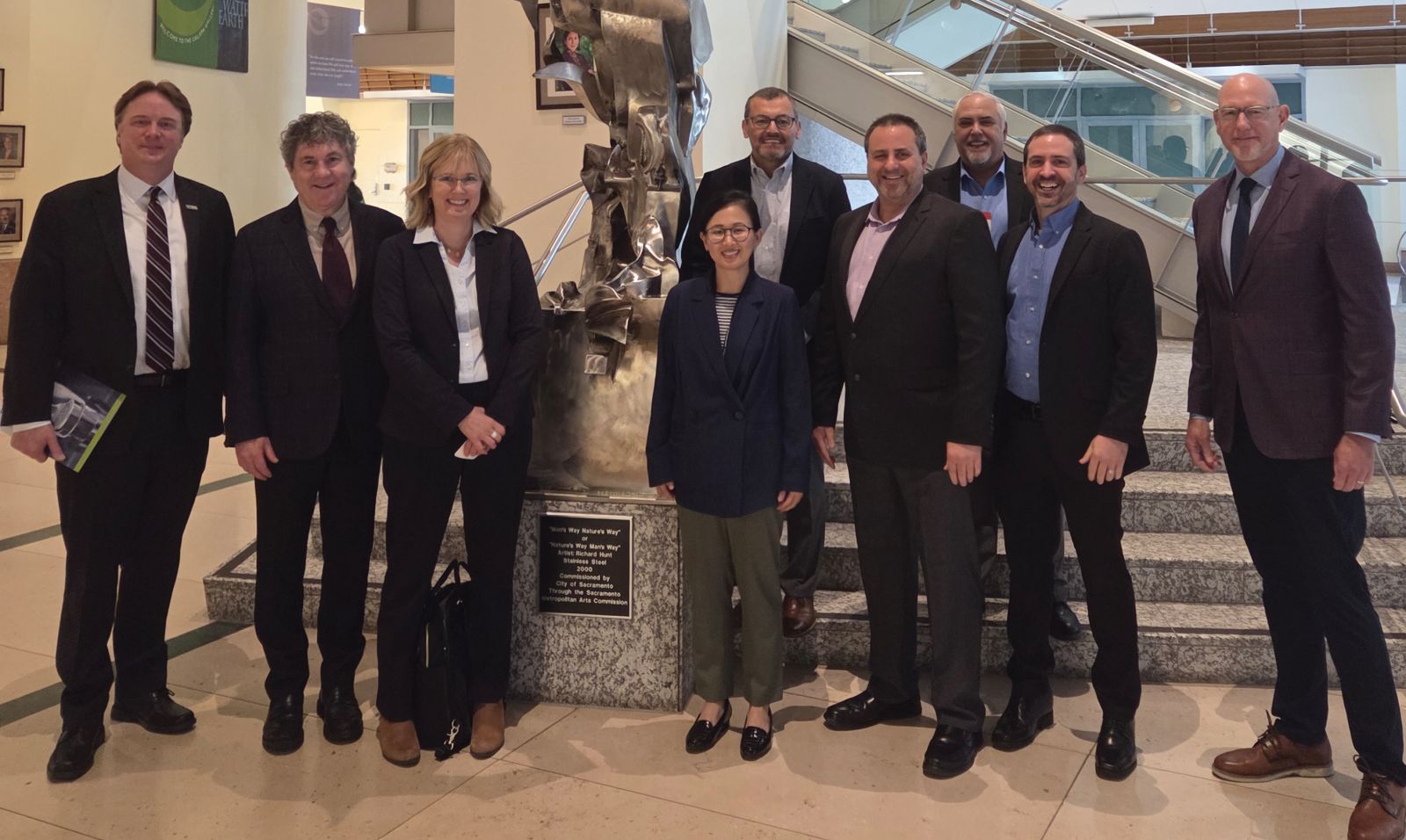
The PMI California Legislative Forum and Fly-In, March 9-10 in Sacramento, was marked by positive progress in regard to toilet flush rates and workforce development. “California is 20 percent of the U.S. market,” stated Plumbing Manufacturers International’s California government affairs consultant Jerry Desmond. “As goes California, so goes the country. If California changes, it’s a de facto change for the industry. That’s why our California fly-in is so important.”
Toilet flush rate update
The California Energy Commission (CEC) signaled good news on toilet flush rate regulations, Desmond said. “For the last three or four years, PMI has been advocating for moderation in proposed flush volume regulations,” Desmond explained “The state had proposed lowering all flush volumes from the current 1.28 gallons per flush (gpf) regulation to 1.1 gpf, but we successfully engaged with the commission to outline the potential issues and obstacles.”
Desmond said that immediately prior to the meeting, PMI received confirmation that the CEC was pursuing a two-path approach, one for dual-flush toilets and one for single flush. For dual-flush toilets, the CEC will advocate for lower flush volume (0.9 gpf for light flush and 1.28 for normal flush) and begin a request for information (RFI) process to define standards for regulation and adoption by the end of the year.
“This is progress for PMI members,” Desmond declared. “We’ve worked diligently to show policymakers that an across-the-board flow rate change would create a tremendous change to existing R&D, engineering and manufacturing.”
For single-flush toilets, the CEC will honor the moratorium on statewide regulatory changes spurred by the Palisades fires. “The CEC could have addressed single-flush toilets in Title 20, but they’ve signaled they’re not going to move forward with regulating single flush toilets until 2030,” Desmond explained. PMI had previously shared with legislators and the commission that only about 25% of single-flush toilets in use meet the current 1.28 gpf standards, and work needs to be done to increase consumer acceptance, he said.
Next steps for flush volume regulations
With this news, PMI will gather feedback from members on the PMI Technical and Advocacy/Government Affairs Committees on whether the industry can support a changed standard for dual flush toilets from 1.1 gpf to 0.9 gpf, from both an engineering and manufacturing perspective. Desmond said he anticipates that PMI will formulate a response and position paper to address industry concerns and advocate for whatever changes would be necessary.
Desmond also noted potential concerns regarding potential labeling requirements for dual-flush toilets. “Without standardized flushing mechanisms, labels for water use on dual-flush toilets might better be managed through manufacturer instructions, not an affixed label,” he stated.
Workforce readiness
Another area of progress from the fly-in was enthusiasm for various workforce readiness initiatives. Troy Benavidez, international government relations leader for LIXIL, said that workforce development is a critical need to offset the current plumber shortage. “Out of 540 industries, 520 rely on plumbing and plumbers,” Benavidez explained. “From aerospace to automobile industries, the skilled labor shortage is having a tremendous financial impact.”
Benavidez was part of the PMI contingent that met with several legislators including assembly member Stan Ellis and senator Steven Choi to increase awareness of the economic impact of the plumbing shortage and encourage legislators to close the skilled training gap. LIXIL recently released findings from a study on this issue (tinyurl.com/3wjuutp4).
“Plumbing and plumbing manufacturing jobs are good jobs,” Benavidez said. “We need people who are trained in the advanced technologies necessary to build the products and materials that plumbers will install and maintain. The skill set for plumbing is evolving as products innovate and become more technologically advanced.”
Benavidez added that this is not just a focus for California. “PMI will be taking this message to every state legislature. Today’s plumbing gap is significant, and the need for highly skilled plumbing professionals, more funding for two-year institutions, increased apprenticeship programs, and speed of training should be expedited.”
For more information, members are invited to join the monthly PMI Advocacy/Government Affairs Committee call.
Supreme Court Tariffs Ruling Leads to Continuing Legal Actions
 By Laura McGowan, PMI Communications Team, Valek and Co.
The Feb. 20 Supreme Court ruling in Learning Resources, Inc. v. Trump invalidated a broad range of tariffs made by President Donald Trump using the International Emergency Economic Powers Act (IEEPA). The decision resulted in a flurry of motions made by lower courts and alternative tariffs imposed by the administration—all while leaving no clear path to compensation for already-collected tariffs.
The Supreme Court, in a 6–3 decision, concluded that IEEPA does not extend to tariff-setting authority, a power reserved to Congress. As a result, a broad swath of tariffs previously imposed under IEEPA were deemed invalid and would no longer be collected on imports after Feb. 24, 2026, according to U.S. Customs and Border Protection (CBP).
The case was remanded to the United States Court of Appeals for the Federal Circuit (CAFC) within 32 days of the Supreme Court ruling, or about March 24. However, in the week after the ruling, a filing was made in the CAFC asking it to immediately remand the case to the Court of International Trade (CIT), said Nicole Bivens Collinson, managing principal, operating committee member, at the law firm of Sandler, Travis & Rosenberg.
Meanwhile, even though the original case has not yet made it back to the CIT, a new case was filed in the CIT by Atmus Filtration after which the court issued an order directing the CBP to immediately refund all IEEPA tariffs on liquidated and unliquidated entries. That order was subsequently modified another two times to 1) limit the refund of tariffs to the IEEPA border/fentanyl and reciprocal tariffs, and 2) to not require “immediate” refunds by CBP pending its March 4 request for a 45-day grace period to develop a program for importers to file with CBP to seek a refund. However, even if CBP develops a program, the Department of Justice (DOJ) will likely appeal the judge’s order. “Right now, we’re waiting, and we may see appeals in these cases about how to apply for return of tariffs paid,” Bivens Collinson said.
No mechanism yet to apply for refunds
The Supreme Court ruling did not provide any directive or process for refunds of about $175 billion in duties collected under the invalidated tariffs. “The Department of Justice presented testimony from CBP officials that said refunds would take 4 million work hours to complete,” said Bivens Collinson. “It’s clear the onus would be on importers,” and CBP has begun developing a process they call the Consolidated Administration and Process of Entries or CAPE, which would require importers to pull reports from their Automated Commercial Environment (ACE) account showing which entries are due refunds. CBP would then verify those reports and review them as necessary, then would consolidate the entries and provide refunds directly into the importers electronic refund account (which was mandatory for any refunds from CBP on Feb. 6). In a filing on March 12, CBP reported that its tariff refund portal is between 40% and 80% complete, marking progress in handling nearly $170 billion in overturned duties.
The Trump administration quickly pivoted to other tariffs. “The Supreme Court ruling doesn’t impact Section 301 tariffs on China or Section 232 tariffs, which have continuing impacts on PMI members,” said Bivens Collinson. “Section 122 tariffs can only be used in cases of severe imbalance balance of payments problems, and the administration is including trade deficits in that calculation. Using Section 122 and Section 232 tariffs require a deeper investigation, which may relieve some of the burdens, but could result in higher more IEEPA-like tariffs.”
Frustration remains for U.S. businesses
Uncertainty around tariffs and lack of clarity around refunds has led to frustration for many businesses facing increased costs without predictable conclusions.
“At the end of the day, there’s no supply chain security—from tariffs impacting importing costs to rising oil prices that impact how our members move products, nothing is happening in a predictable pattern,” said PMI’s federal government affairs consultant Stephanie Salmon.
“The administration is considering expanding Section 232 national security tariffs to products produced or used by plumbing manufacturers, including plastic piping, cast iron, and industrial chemicals,” Salmon explained. In addition, there are several pending Section 232 investigations, including ones for industrial machinery and robotics with a report due on May 26. “PMI members are concerned about (these investigations) since most equipment and replacement parts are made overseas,” she added.
PMI members are already faced with steel, aluminum and copper tariffs set at 50% for all countries except the United Kingdom, for which steel and aluminum are set at 25%, adding to supply chain challenges for products that are not readily available in the U.S. As part of a bill addressing housing affordability, legislation has recently been introduced in the Senate to create an exemption process for building materials from tariffs, but this measure has not garnered Republican support, Salmon continued.
On March 11, the office of the U.S. Trade Representative (USTR) announced the initiation of Section 301 investigations that will examine structural excess capacity and production in the manufacturing sectors of 16 economies to determine whether those economies’ large or persistent trade surpluses, or their underutilized or unused capacity, are impacting U.S. domestic production and causing the U.S. to fall behind foreign competitors. The economies subject to investigation are China, the European Union, Singapore, Switzerland, Norway, Indonesia, Malaysia, Cambodia, Thailand, Korea, Vietnam, Taiwan, Bangladesh, Mexico, Japan, and India.
In addition, on March 12, USTR initiated additional Section 301 investigations into 60 countries related to their alleged failure to impose and enforce a ban on the importation of goods produced with forced labor. The 60 impacted countries can be found at this link: tinyurl.com/bdf6khvu. Comments on both of these Section 301 investigations are due April 15.
To stay abreast of the changing landscape of tariffs and possible resolution, Bivens Collinson recommended that members monitor all entries in their ACE account with CBP. “Members should monitor and keep track of the date of entry, date of liquidation (314 days after entry), and add columns that track both 180 days after date of liquidation to establish the protest deadline and two years from the first incurred tariffs which is the deadline to file in the Court of International Trade to protect your right to a refund,” she emphasized.
In addition, Bivens Collinson recommended that PMI members can keep up to date on late-breaking tariff changes by subscribing to Sandler, Travis & Rosenberg’s “Two Minutes in Trade” micro-podcast and daily e-newsletter, Trade Report (available in English and Spanish) at tinyurl.com/2keaxu3n.
Delta Faucet Company, PMI Celebrate Partnership
 By Ray Valek, PMI Communications Team, Valek and Co.
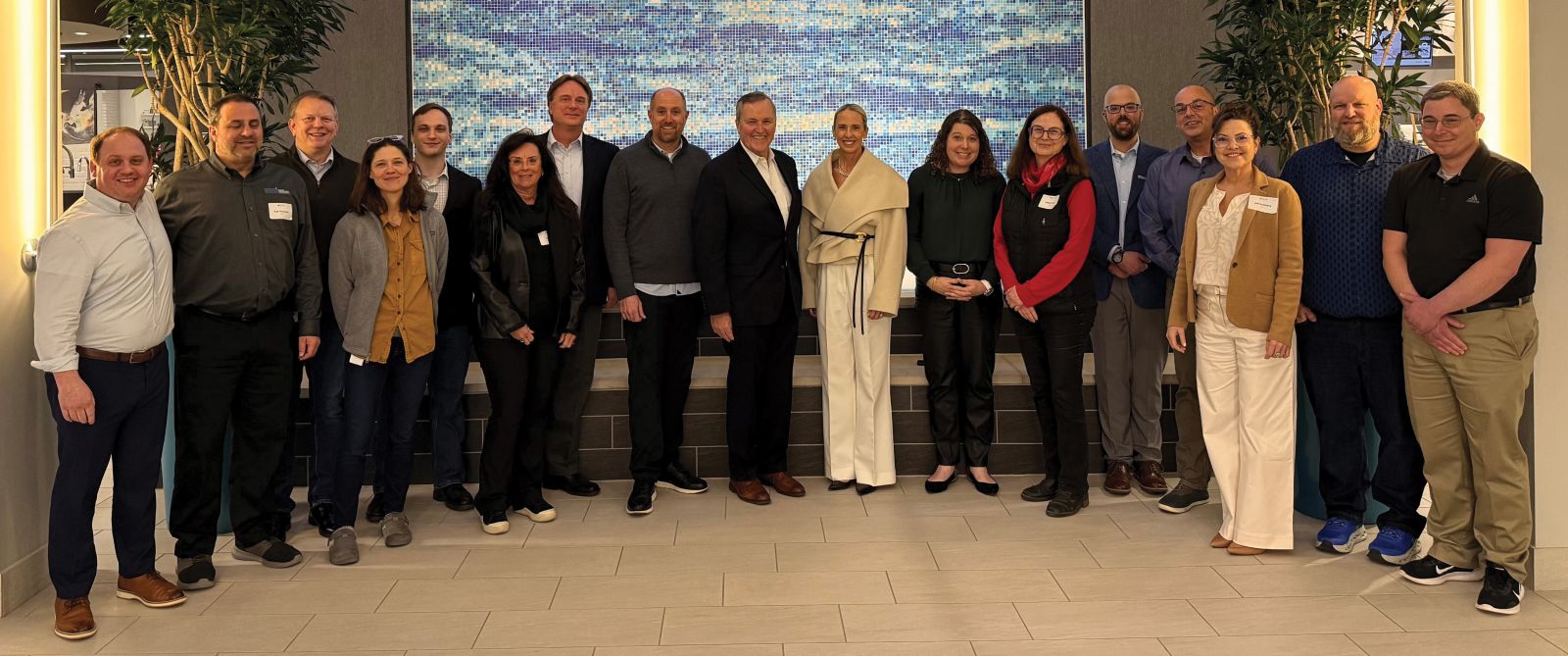
In the spirit of continuing their multi-generational partnership, Delta Faucet Company welcomed Plumbing Manufacturers International staff to its Indianapolis headquarters.
A host of Delta Faucet Company employees participated in rolling out the red carpet for PMI with a tour of the company’s industrial design studio, test lab, and new product experience facility; presentations on the company’s history and products; and a roundtable discussion about the current and future opportunities in the plumbing industry.
Three participants at the event currently serve in PMI leadership positions: Bob Neff, the fifth Delta Faucet Company employee to serve as PMI Board of Directors president; Erin Beyer, PMI Strategic Advisory Council member, and Mike Johnson, co-chair of the PMI Advocacy/Government Affairs Committee and recipient of the 2025 Paul Patton PMI Manufacturing Success Award. Delta Faucet Company President Jill Ehnes also participated in the visit’s activities, as well as many others.
PMI CEO/Executive Director Kerry Stackpole was joined by Jodi Stuhrberg, director of programs and administration; Kyle Thompson, technical director; Matthew Windrum, director of state government affairs, policy, and advocacy; and Ann Geier, administrative assistant.
“The visit was a fantastic opportunity not only to strengthen our ongoing partnership, but also to help more members of the Delta Faucet Company team gain a deeper understanding of the great work PMI is doing for our industry,” Johnson said. “The conversations and tours sparked a lot of interest and appreciation on our end, and we are excited about the positive momentum built from our time together.”
Stackpole said he was fascinated by Delta Faucet Company’s industrial design studio, particularly the use of prototypes to test out new ideas, as well as the testing facility that is used to assure product quality. “But most of all I appreciated the opportunity to learn more about Delta Faucet Company and to discuss what we can do for each other,” he stated.
Stuhrberg said the enthusiasm and passion of the team was clearly evident. “We truly appreciated the time and effort everyone put into making the visit so meaningful,” she enthused. “We learned a great deal about the many moving parts that contribute to Delta Faucet Company’s continued success—something that clearly does not happen by accident. It takes a strong, dedicated team, and it is evident Delta Faucet Company has an exceptional one.”
PMI26 in New Orleans Offers Nightlife, Great Food & History
 By Caroline Hyde, PMI Communications Team, Valek and Co.
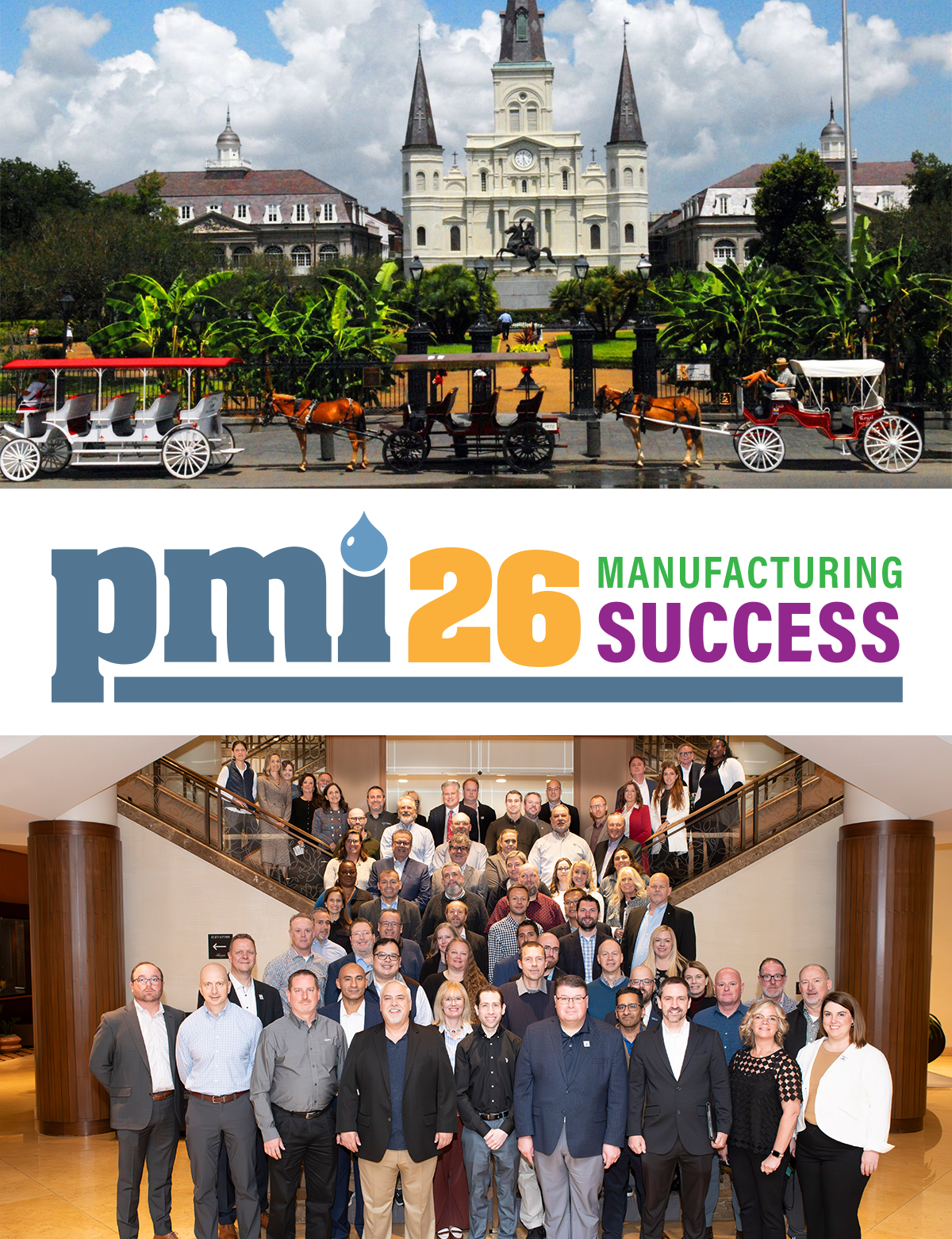
Have you marked your calendar yet? This PMI26 Manufacturing Success Conference will be hosted Nov. 2-5 at Loews Hotel in New Orleans, a vibrant and evocative city full of stories, amazing food options, and beautiful sightseeing opportunities. Let’s put a spotlight on our hosts and learn about what the Big Easy has to offer.
Exciting nightlife
One cannot imagine New Orleans without Bourbon Street, one of the most famous bar corridors in the world, known for late-night food and drink options, as well as live jazz playing practically on every corner. After an inspirational afternoon spent at the conference, take a short 15-minute walk down to the historic French Quarter and take in the gorgeous architecture while enjoying a cocktail, or catch a dueling piano show at Pat O’Brien’s. In this city, the music finds you—not the other way around.
Nearby daytime activities
Not a night owl? That’s no problem–there are just as many opportunities for attendees who prefer to get a good night’s sleep. The Loews Hotel is ideally located in the city’s Central Business District, giving attendees an abundance of activities to choose from. The Audubon Aquarium and Insectarium are less than half a mile away from the hotel, providing an immersive and up-close experience with creatures great and small. The Shops at Canal Place are also close by, boasting name-brand boutiques including Tiffany and Co., Banana Republic, and more. For the cinephiles, attached to Canal Place is the Prytania Theater, the oldest cinema in New Orleans. If you’d like to try your luck, Harrah’s Casino is across the street from the hotel, or keep walking east along Poydras to get a nice view of the mighty Mississippi river.
Rooted in history
Founded in 1718, New Orleans is one of the oldest cities in the nation and has a plethora of fascinating sites to visit. As the conference will be taking place during the first week in November, the city will be just finishing up Halloween celebrations—the perfect time to partake in spooky activities. Take one of their iconic streetcars over to St. Louis Cemetery No. 1, where you will be taken on a tour of the grounds by a knowledgeable and charismatic guide and learn about some of the most influential people who once lived in the city, along with their incredible above-ground tombs. In the same vein, there are plenty of ghost tours offered all over town, most notably in the French Quarter. If spooky isn’t your vibe, the National WWII Museum is a 15-minute walk away from the Loews Hotel and boasts immersive exhibits that will take you back in time and face-to-face with relics from the past.
Hotel amenities
Don’t want to leave the venue? That’s no problem, either. The Loews Hotel has its own lap pool and fitness center, as well as a 24-hour business center that provides printing, faxing, and personal computers. On site there is not one, but two separate restaurants to choose from. Poydras and Peters, a brasserie-style culinary experience, prides itself on using local ingredients that encapsulate the vibrant spirit of New Orleans. There is also Flavor by Loews Hotel, which partners with beloved local artisans to curate delicious Big Easy bites.
Amazing food
Beignets, seafood boils, Cajun heat—oh my! New Orleans is a foodie’s dream. A stop at the iconic Cafe du Monde is simply a must. Their world famous beignets are pillowy soft—make sure you’ve got something to catch all that powdered sugar! For a cost-effective meal choice, check out Ernst Café down South Peters for Creole classics like jambalaya, gumbo, and po’boys. If you’re looking to spend a little extra, try Maria’s Oyster Bar and share a plate of oysters with friends. Can’t decide on what to eat? Only a 10-minute walk away from the hotel is the Court of Two Sisters, a brunch buffet offering live jazz, a ribeye carving station, an omelet station, and much more. For $36 a person, this is an all-you-can-eat that is worth the small hike.
Make sure you have your flights booked—and don’t forget to make some time for a little fun in this beautiful and unique city.
Why We Hesitate—and How to Overcome It
 Even the most capable professionals experience hesitation—especially when visibility, responsibility and stakes increase. The key isn’t eliminating fear; it’s learning how to recognize what’s happening internally and move forward with confidence.
Join us on May 14, 1-2:30 CT, for “Momentum Intelligence: Why We Hesitate—and How to Overcome It,” an interactive session with Tiffany Houser, founder and executive coach, EVOLVE. This Women of PMI workshop is offered to employees of PMI member companies as a benefit of your membership.
In this 90-minute experiential workshop, you will receive a practical framework to help you recognize hesitation patterns and move through them with clarity and momentum. You’ll learn how to:
- Identify your personal hesitation patterns
- Understand what they’re protecting
- Interrupt them—even under pressure—and move forward with confidence
- Workshop participants will receive a pre-session worksheet and a post-session recap to help apply what you learn.
Register today for the workshop today: tinyurl.com/3hbxam3u
The Women of PMI initiative celebrates, honors and supports the contributions of PMI’s women members to the plumbing manufacturing industry. Learn more about Women of PMI: tinyurl.com/55nrbzw3