

August 2026
Join or Innovate: Why Industry Associations Matter

Kerry Stackpole
By Kerry Stackpole, IOM, FASAE, CAE, PMI CEO/Executive Director
On May 9, 1754, Benjamin Franklin published one of the most enduring political cartoons in American history. A snake, severed into eight pieces representing the American colonies, appeared beneath three simple words: “Join, or Die.”
Franklin’s message was unmistakable. Divided, the colonies would be weaker. United, they could accomplish what none could achieve alone. More than 270 years later, the same principle remains remarkably relevant—not only in politics, but in American manufacturing.
Today’s plumbing fixtures and fittings industry operates in an environment of unprecedented complexity. Manufacturers face a constant stream of evolving regulations, shifting consumer expectations, global competition, supply chain disruptions, cybersecurity threats, workforce shortages, and increasing demands for sustainability. At the same time, they are expected to produce products that are safer, smarter, more durable, more affordable, and more water efficient than ever before.
No single company—regardless of its size, history or market position—can effectively navigate every challenge alone. That is where Plumbing Manufacturers International proves its greatest value.
Strength through collaboration
Like Franklin’s message to the colonies, manufacturers become stronger when they work together on the issues that affect everyone while continuing to compete vigorously in the marketplace. Collaboration on public policy, technical standards, scientific research, workforce development, and product safety creates an environment where competition thrives through innovation rather than regulatory confusion or fragmented advocacy.
This distinction is important: trade associations like PMI that facilitate collaboration do not diminish competition. They strengthen it.
The plumbing industry provides an excellent example. The remarkable advances our customers now enjoy—from high-performing toilets that use a fraction of the water required only a generation ago to sophisticated faucets and showerheads that deliver exceptional user experiences while dramatically reducing water consumption—did not emerge in isolation.
They were made possible by decades of engineering ingenuity, investment in research and development, consensus standards, product testing, certification programs, and collaboration among manufacturers, regulators, code officials, utilities, and public health experts.
The result has been extraordinary
Modern water-efficient plumbing products routinely outperform their predecessors while using substantially less water. They improve sanitation, reduce utility costs, protect drinking water resources, and help communities stretch limited water supplies without asking customers to sacrifice comfort or performance.
Those advances rarely happen by accident. They require an industry willing to share technical expertise, identify emerging risks, resolve common challenges, and advocate for policies grounded in sound science and engineering.
Trade associations provide the forum where those conversations can occur. They bring competitors together—not to determine who wins in the marketplace—but to ensure the marketplace itself remains healthy, innovative and capable of serving the public interest.
Whether developing consensus standards, supporting independent certification, engaging policymakers, educating the public about plumbing-related issues, or defending practical, science-based regulations, industry associations create the foundation upon which individual companies can innovate.
The alternative is fragmentation
Without a unified industry voice, regulations become inconsistent across jurisdictions. Technical requirements drift apart. Manufacturers devote increasing resources to navigating conflicting rules rather than designing better products. Innovation slows as engineering talent shifts from solving customer problems to solving compliance problems.
The users of our products ultimately pay the price through higher costs, fewer choices, and slower technological advancement.
Franklin understood that division carries consequences. His “Join, or Die” cartoon was never simply about survival. It was about recognizing that shared challenges demand shared leadership. That lesson continues to resonate today.
For PMI members—the manufacturers of plumbing fixtures and fittings—joining together through a strong trade association is not about sacrificing individuality. Every company continues to differentiate itself through superior engineering, design, customer service, and innovation.
Collective action enables credibility
Instead, collective action allows the industry to speak with credibility on issues that affect everyone: protecting public health, advancing water efficiency, improving building safety, strengthening domestic manufacturing, and ensuring regulatory decisions reflect technical expertise rather than misconception.
The plumbing products found in homes, schools, hospitals, and commercial buildings today represent generations of continuous improvement. They embody American ingenuity, engineering excellence, and an unwavering commitment to delivering more performance with less water.
That progress did not happen because manufacturers stood apart. It happened because they recognized that some challenges—and some opportunities—are simply too important to tackle alone.
Benjamin Franklin’s message still speaks across the centuries. For industries committed to innovation, resilience, and responsible stewardship of our most precious natural resource, the choice remains as compelling today as it was in 1754:
Join—and innovate together.
Registration for PMI26 in New Orleans Now Open
By Ray Valek, PMI Communications Team, Valek and Co.
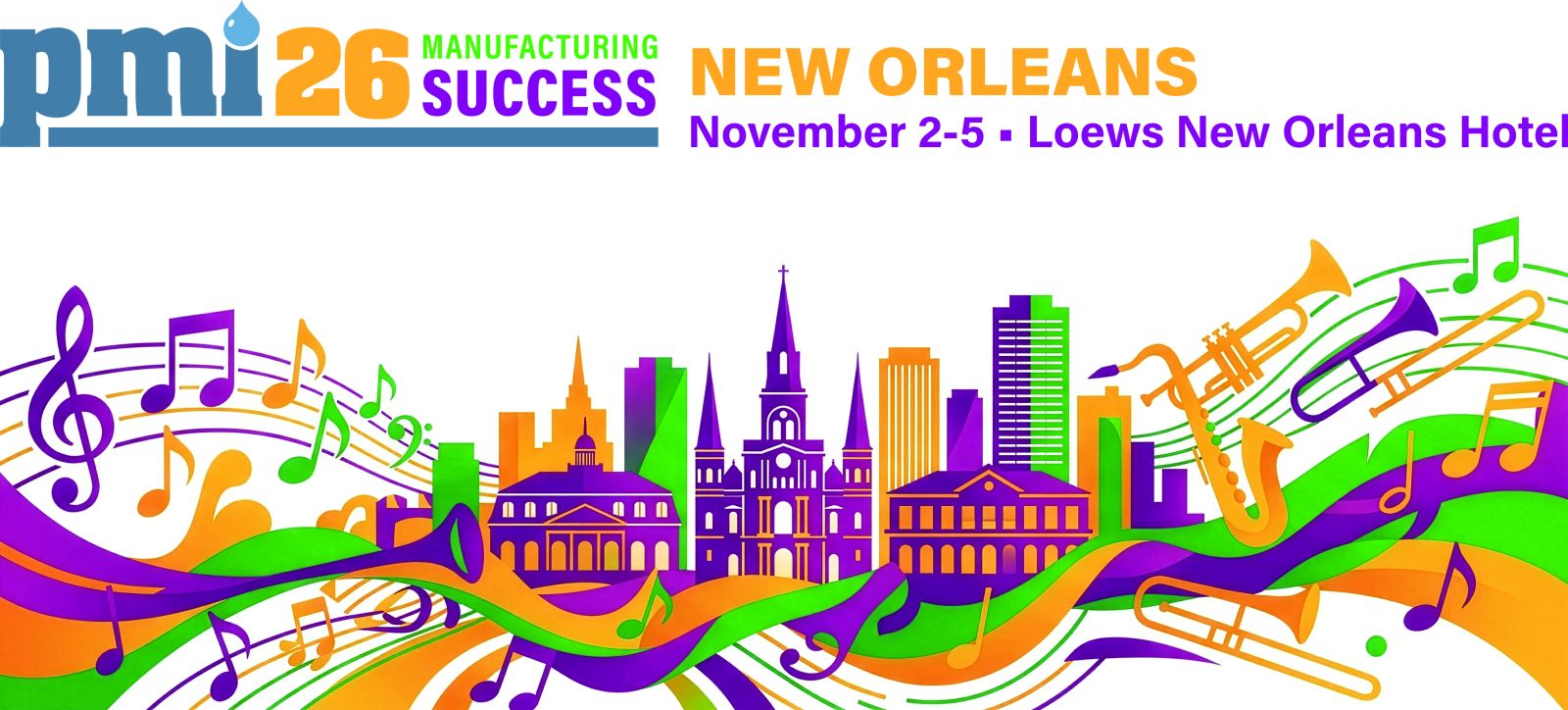
Registration for the PMI26 Manufacturing Success Conference is now open. Register ASAP to experience plumbing manufacturing’s premiere event, Nov. 2-5 at the Loews New Orleans Hotel!
The PMI26 program will be highlighted by keynote speaker and American Ninja Warrior Alex Weber, the Women of PMI Breakfast with Simone Bruni of Demo Diva, and the Day 1 PMI Inspiring Leaders Program at the National World War II Museum facilitated by executive coach Erin Meadows. See past issues of Ripple Effect to learn more about them. And act by Aug. 31 to nominate a deserving colleague for the Paul Patton PMI Manufacturing Success Award (https://tinyurl.com/367utyrt)—which grants complimentary PMI26 registration.
Latest additions to program to address crucial industry issues
Addressing the water and sustainability issues surrounding the building of data centers will be John Moynier, principal and water practice leader, CONSOR Engineers. His presentation will look at the rapid evolution of the demand to build data centers and provide a detailed overview of the interdependent water-energy nexus, including the controversy over the power and water required to operate advanced cooling systems. A subject matter expert in environmental compliance, water and water resources planning, and floodplain management, Moynier leads CONSOR’s water practice in the Southeast, with a focus on water and wastewater master planning and alternative water supplies such as indirect and direct potable reuse, aquifer storage and recovery, and desalination.
Josh Schorr of the U.S. Access Board and Gene Boecker of Code Consultants and the Accessibility Professionals Association will discuss the regulations of the Americans with Disabilities Act and ICC/ANSI A117.1 Standard for Accessible and Usable Buildings and Facilities, including specific requirements for plumbing fixtures. Schorr provides technical assistance and training on American Disabilities Act and applied behavior analysis design standards.
A voting member of the ICC/ANSI A117.1 Committee, Boecker provides proactive federal, state and municipal standard reviews for facilities during design and construction phases for access and means of egress relative to disabled accessibility, as well as onsite surveys of in-situ conditions. His projects include the New York World Trade Center buildings, Hudson Yards in New York, and Google’s new facilities in Mountain View, California.
The rapidly changing landscape of PFAS regulation, policy and compliance at the federal and state levels will be the focus of presentations by Jay West, senior director, American Chemistry Council, and John Gardella, chair of CMBG3 Law’s PFAS practice group.
The executive director of the council’s Performance Fluoropolymer Partnership, West leads advocacy for the future production and use of fluoropolymers and is actively engaged in legislative and regulatory matters at the international, national and state levels. He also serves as chair of the Chemicals Committee of Business at the Organisation for Economic Co-operation and Development; this committee helps ensure that OECD’s chemical testing guidelines and guidance for risk assessment and management are informed by the voice of the regulated community and grounded in sound science.
Named a thought leader on PFAS pollution issues by the National Law Review, Gardella speaks often on PFAS compliance, litigation, and financial risk forecasting to private equity and hedge fund organizations, professional risk analyst groups, certified public accountants, insurance companies, and private corporations.
A familiar face to PMI members, Connor Lokar, senior forecaster, ITR Economics, will once again provide economic intelligence with charm and candor. With his quick wit and knack for storytelling, he successfully educates his audiences while simultaneously captivating them. Thousands of business leaders have enjoyed his dynamic approach; Lokar emphasizes the applicability of economic intelligence and calls his audiences to action. When not on stage, Lokar contributes his economic expertise in the role of trusted advisor, consulting directly with management teams of firms large and small.
The PMI government affairs team of Jerry Desmond, Stephanie Salmon and Matthew Windrum will update the PMI26 audience on PMI’s federal and state advocacy activities. This team monitors legislative and regulatory activity and engages policymakers on issues including AI and data centers, extended producer responsibility, filtered drinking water in schools, greenhouse gas emissions, housing, Internet of Things and privacy, microplastics, National Institute of Standards and Technology plumbing research, PFAS, skilled trades workforce development, tariffs and trade, water and energy efficiency, water infrastructure, and water reuse.
Lora Ann Chaisson, principal chief, United Houma Nation, will acknowledge how the land and waters now comprising New Orleans were home to indigenous people. Her presentation will center on the history of the Houma people, how water has shaped their lives, and how oil and gas development, hurricanes, coastal land loss and changes to the land, climate and levees continue to impact their way of life and future.
Ariel Brenner of the New Buildings Institute will discuss PCR Part A, which contains the overarching, uniform Life Cycle Assessment calculation rules, system boundaries, and reporting requirements that apply to all building or product categories.
Stay tuned for more program updates! Register now: https://tinyurl.com/395mawzf
|
Registration Bundles and Discounts Don’t miss the PMI26 Inspiring Leaders Program, “Leadership That Feels as Good as It Looks,” on Nov. 2 at the National World War II Museum with Erin Meadows. Attend this event by choosing the discounted registration bundle. Register for the bundle at https://tinyurl.com/395mawzf. Also, if your organization has four or more employees attending, PMI will extend a 20% discount starting with the fourth registration! Please reach out to Jodi Stuhrberg at jstuhrberg@safeplumbing.org for the details prior to registering. Another way to gain additional registrations at a favorable rate is to become a PMI26 sponsor. Learn more at https://tinyurl.com/yad3w96v. As an attendee or sponsor, this is your company’s chance to connect with industry experts, gain crucial intelligence, and network with the decision-makers who matter most. Register now at https://tinyurl.com/395mawzf. |
Putting PMI On Policymakers’ Radar
By Judy Wohlt, PMI Communications Team, Valek and Co.
The conversation might begin with a governor’s chief of staff after a policy session. It could happen outside a committee meeting, in the hallway of a legislative summit, or at a state capitol. For Matthew Windrum, every handshake is more than an introduction—it’s an opportunity to make Plumbing Manufacturers International a more familiar name before important policy decisions are made.
His travel schedule includes meetings at the Wisconsin State Capitol in Madison, the National Governors Association (NGA) Policy Summit in New Orleans, the American Legislative Exchange Council (ALEC) Annual Meeting in Orlando, and the National Conference of State Legislatures (NCSL) Legislative Summit in Chicago.
Each stop offers a somewhat different government affairs audience—but the same objective: positioning PMI as a trusted resource on clean, safe drinking water, water efficiency, skilled trades workforce development, manufacturing, and more. “The main purpose is to network, raise brand awareness, and share policy priorities and plumbing manufacturing best practices with governors, legislators, and other key stakeholders,” Windrum explained. “At these events, we’re always looking out for the interests of our members.”
Making maximum impact
Few events offer more opportunities to connect with state lawmakers than the NCSL Legislative Summit, the nation’s largest annual gathering of state legislators and legislative staff. “Attending this conference maximizes my ability to raise our profile when I’m able to meet a hundred people in one day,” Windrum emphasized.
These meetings give Windrum the opportunity to speak with policymakers about ways states can strengthen the skilled trades pipeline, expand incentives for manufacturers that invest in workforce training, protect school drinking water through Filter First legislation, and encourage water efficiency through rebates, grants, and tax-free holidays that make high-efficiency plumbing products more affordable.
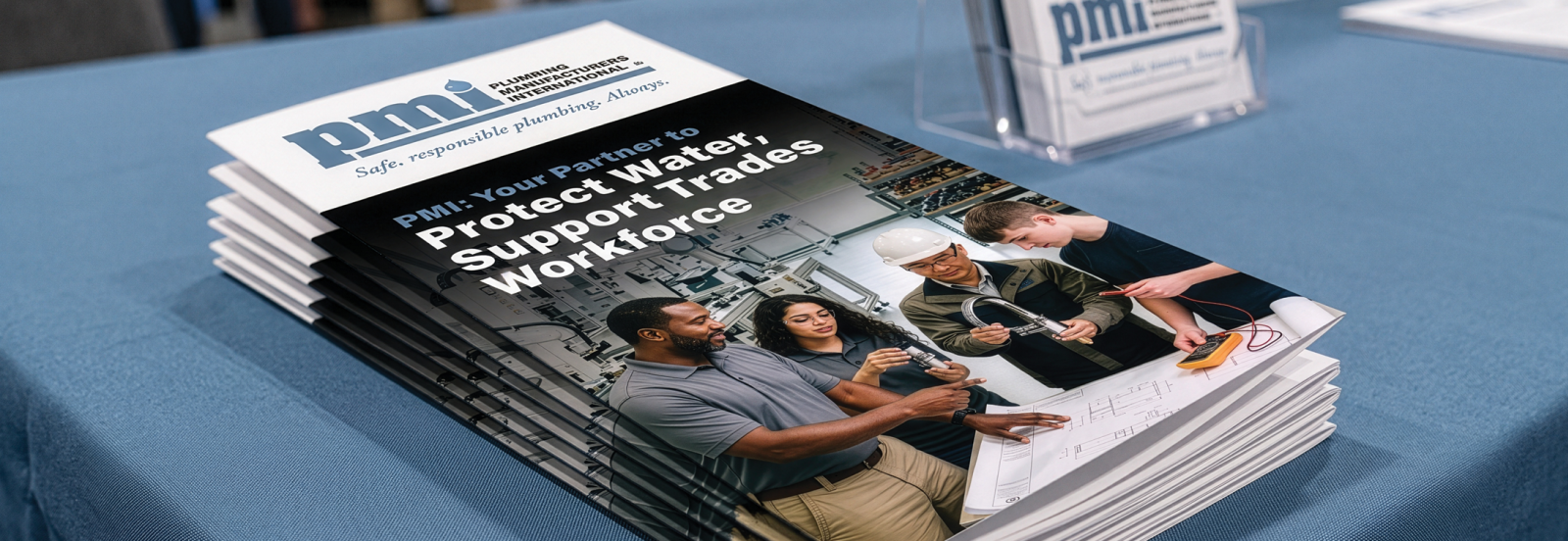
Windrum and PMI team members—including director of programs and administration Jodi Stuhrberg, technical director Kyle Thompson, and California government affairs consultant Jerry Desmond—hand out five-minute shower timers as a reminder that small actions can make a meaningful difference in conserving water. They also share PMI brochures that highlight PMI’s advocacy efforts on boosting skilled trades, supporting water-efficiency incentives, and filtering water in older schools to reduce lead-in-water risks.
Focusing on WaterSense
Water policy takes center stage at many of the conferences he attends, particularly at the Council of State Governments (CSG) West Annual Meeting, where state legislators and legislative staff meet to address critical issues facing state legislatures. “Water scarcity is an important issue across the West,” Windrum noted.
“These meetings are a great opportunity to talk about WaterSense and how PMI members are helping save water, among other things,” he added. Using WaterSense materials and other PMI educational resources, he highlights practical solutions that benefit both consumers and state conservation efforts.
Confirming the industry’s ‘economic punch’
His discussions reinforce that plumbing manufacturing is not only essential to public health and safety but also a major economic driver that supports hundreds of thousands of jobs and generates $129 billion in economic output.
During his visits to various state capitols, including Springfield, Illinois, and Albany, New York, Windrum affirmed the industry’s “economic punch.” He engages in conversations about the need for more plumbers and how the skilled trades shortage adversely impacts the economy. He shares PMI’s brochure on “Plumbing Manufacturing: A Key Driver of Jobs, Growth and Innovation.”
Keeping conversations going
Regular face time and meetings keep important issues in focus—before, during and after legislative sessions.
During his visit to Wisconsin’s capitol, Windrum met with the sponsor of the state’s proposed Filter First legislation. Although the bill will need to be reintroduced, the discussions established a foundation for continued collaboration during the next legislative session. He shared how he is looking forward to testifying on additional Filter First legislation in other states following his recent testimony before Pennsylvania lawmakers.
The NGA Annual Policy Summit offers another unique opportunity. “There’s a good ratio of governors and key governor staff to lobbyists,” Windrum said. “You have a good shot at getting real face time with governors and their top aides.”
As more policymakers come to recognize PMI as a knowledgeable, solutions-oriented partner, these connections will help open doors for meaningful conversations—and good outcomes—for the plumbing manufacturing industry.
ROAD to Housing Act Moves Affordable Housing Forward
By Judy Wohlt, PMI Communications Team, Valek and Co.
The 21st Century ROAD to Housing Act, the most comprehensive housing legislation in decades, became law on July 11 after President Donald Trump declined to sign it. The bipartisan legislation is intended to boost housing supply—which would create higher demand for plumbing products—and increase affordability in part by limiting institutional investors from buying single-family homes.
For years, the U.S. housing shortage has pushed home prices higher, keeping homebuying out of reach for many. The shortage, which housing experts estimate to be in the millions, also has limited economic growth, slowed workforce mobility, and left countless construction projects on the drawing board. The new ROAD to Housing Act is meant to tackle the problem from multiple angles by reducing barriers to development, modernizing permitting processes, and encouraging communities to build more homes, according to various news sources used for this article.
Plumbing Manufacturers International supported the legislation, recognizing its importance in creating more housing by breaking down impediments to new home and apartment construction such as excessive regulations, building-material supply chain bottlenecks, and a chronic shortage of skilled labor. PMI advocated for the legislation during the PMI Washington Legislative Forum and Fly-In last September.
The bill, which passed in the House of Representatives by 358–32 and in the Senate by 85-5, complements a broader federal effort to increase housing production. Congress continues to consider bipartisan proposals to strengthen the Low-Income Housing Tax Credit, one of the nation’s most successful tools for financing affordable rental housing. At the same time, the Department of Housing and Urban Development has encouraged state and local governments to remove unnecessary regulatory barriers that add cost and delay to residential construction.
The bill’s highlights
Among the bill’s most significant provisions are reforms that could accelerate new residential construction by streamlining environmental reviews, reducing permitting delays, and helping local governments modernize outdated zoning and land-use policies.
The package promotes greater use of innovative construction techniques, such as off-site and modular construction, while encouraging updates to building codes that can improve efficiency without compromising safety or performance.
The legislation establishes faster project approvals by allowing builders to use ready-to-use, pre-approved home designs to fast-track permitting. It supports converting underused commercial, office or industrial properties into affordable housing. In addition, the bill prevents large institutional investors from purchasing large blocks of single-family homes and backs the ban with high penalties.
Because cities and states control local building regulations—and the pace of building new homes—the legislation added incentives to encourage municipalities to reform building restrictions. For example, the 21st Century ROAD to Housing Act permanently authorizes the Community Development Block Grant Disaster Recovery (CDBG-DR) program, expanding eligible uses of block grant funding to aid new housing construction. However, the legislation ties CDBG funding to housing growth and penalizes communities with slow growth by cutting their allocations if they neglect to loosen building constraints, reported a realtor.com article.
Building economic momentum
While housing construction serves as an economic growth engine, it also reinforces the importance of maintaining a strong pipeline of skilled trades professionals. As construction activity grows, so does demand for plumbers and other skilled trades workers who install the products manufacturers produce.
Beyond direct product sales, increased housing construction supports distributors, contractors, engineers, builders, and the workers whose livelihoods depend on a healthy construction market.
The benefits also extend to innovation. As more homes are built, developers increasingly seek high-performance, water-efficient products that meet evolving building codes and consumer expectations. Manufacturers that invest in sustainable technologies and advanced plumbing solutions stand to benefit from stronger market demand.
Seeing benefits will take time
Real estate experts and economists caution that the legislation’s impact will take time and patience.
“It could take years for a meaningful uptick in production to materialize and longer for it to have any impact on overall affordability,” noted realtor.com senior economist Joel Berner in a recent article.
The ROAD to Housing Act won’t solve the housing shortage on its own. But by making it easier to build the homes America needs, the new law could help create new opportunities for plumbing manufacturers, strengthen the construction economy, and ease affordability issues.The 21st Century ROAD to Housing Act, the most comprehensive housing legislation in decades, became law on July 11 after President Donald Trump declined to sign it. The bipartisan legislation is intended to boost housing supply—which would create higher demand for plumbing products—and increase affordability in part by limiting institutional investors from buying single-family homes.
The Congruent Leader: Align Your Actions with Your Values

LeAnne Lagasse
By Laura McGowan, PMI Communications Team, Valek and Co.
As part of the ongoing PMI Inspiring Leaders Program workshop series, LeAnne Lagasse shared insights on how to ensure that leadership behaviors reflect and reinforce personal values. Lagasse is the author of “The Congruent Leader: Build Trust, Lead with Self-Awareness” and “Close the Gap Between How You See Yourself and How Others Experience You.”
Lagasse challenged participants to reexamine the widely held concept that good intentions inherently create positive leadership experiences. Too often, a gap exists between how leaders see themselves and the reality of how they are perceived by others in the organization, leading to friction, lack of trust, and inconsistent behaviors.
For leaders seeking to improve trust and achieve congruent leadership, the recipe is straightforward: align intentions, values, and daily behaviors to build trust and authenticity. While most leaders enter interpersonal exchanges with the goal of positive interactions, there can be actions that derail those good intentions, she explained.
Shift from intention to impact
While many leaders genuinely want to support, inspire and develop their teams, trust breaks down when employees experience behaviors that contradict those intentions, Lagasse asserted. The question, she said, is not simply, “What did I mean?” but “What impact did I create?” This shift from intention to impact is the foundation of trustworthy and effective leadership.
This self-awareness is not an inborn personality trait, but rather a leadership advantage that must be developed through curiosity, humility, and a willingness to learn. Lagasse encouraged leaders to gain advice on what they can do personally to improve the team and outcomes by asking trusted colleagues and peers for feedback. This practice of seeking honest guidance can become more difficult when leaders rise to higher positions of authority, as direct reports and peers tend to be more reluctant to provide frequent and candid feedback to those in roles of power and authority. Lagasse emphasized that the burden falls on leaders to actively work to overcome that barrier.
Align values with behavior
Lagasse also focused on the importance of aligning values with leadership behavior. Leaders often say they value collaboration, development or accountability, but employees pay attention to what leaders set as priorities. She encouraged leaders to take a hard look at whether their calendars, decisions and reactions are sending mixed messages and to refocus their communications to ensure that their words match their intended impact. In short, values are not demonstrated by statements alone; they are revealed through repeated actions.
Another point shared by Lagasse is the paradox that natural talents can both be an asset and drawback in congruent leadership. While natural talents can create tremendous impact when used intentionally, strengths can become weaknesses when overused or used as a crutch. For example, a leader who is highly action-oriented may become impulsive, or an optimistic leader may unintentionally dismiss legitimate concerns and cautionary voices. Lagasse mentioned the distinction between talent gaps, weaknesses, and blind spots, emphasizing that blind spots are most visible to other people. For effective congruent leadership, the goal is not to eliminate innate strengths but to manage them wisely and adapt or deemphasize when necessary.
Respect the collective perception
Lagasse introduced the concept of “respecting the collective perception,” which she described as the acknowledgement of the shared, recurring experience others have of a leader across teams and relationships. Rather than dismissing consistent feedback as outliers or isolated incidents, congruent leaders actively look for patterns and adjust their behaviors. This is done most successfully when leaders move from a defensive mindset (“Was I right?”) to a learning mindset (“What can I learn?”).
To conclude, Lagasse challenged participants to identify one leadership behavior they can make more congruent over the next 30 days. The exercise emphasized that congruent leadership means incremental change and improvements, not instant perfection. By continually aligning intentions, behaviors and impact, leaders can foster a culture that directly correlates the trust they wish to build with the behaviors their teams experience.
PMI members can review the workshop’s slides and handouts at https://tinyurl.com/3m2rp4tf.
Happy 20th WaterSense!
By Ray Valek, PMI Communications Team, Valek and Co.
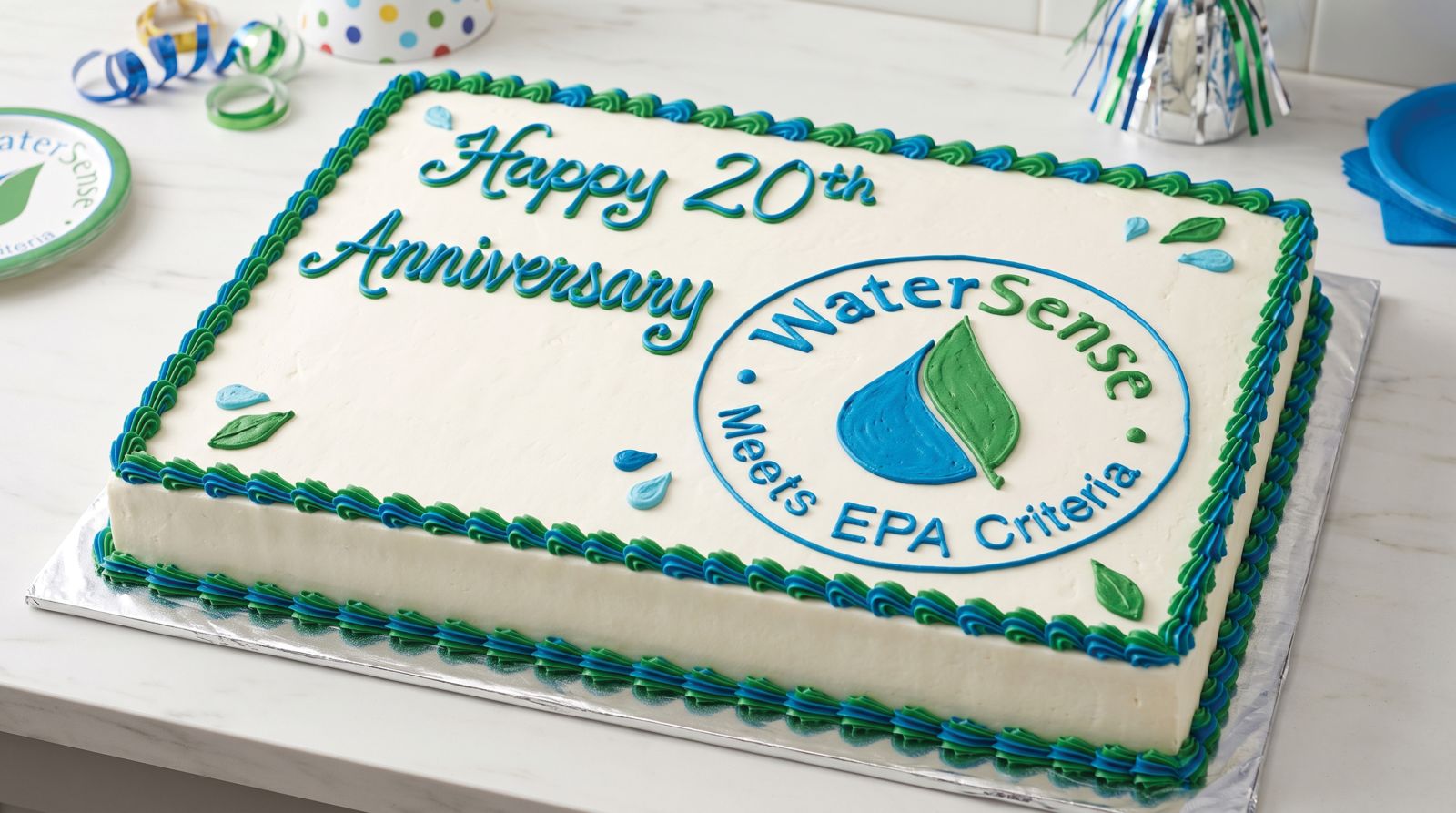
This year marks the Environmental Protection Agency’s WaterSense Program’s 20th anniversary. The program’s current status owes much to Plumbing Manufacturers International’s input and support both during the program’s formation and leading up to the present day.
Before WaterSense, water-efficient plumbing products were not held to consistent performance criteria and labeling, causing a lack of customer satisfaction and trust. Starting in 2004, PMI and its members participated in stakeholder meetings held across the country to provide input on designing a national, voluntary market-based program for promoting water-efficient products, the WaterSense website (https://tinyurl.com/3dep3vn5) states.
This proactive stance enabled PMI to be the leader on water efficiency and other critical industry issues rather than reacting to public policy changes, explained Gary Turner, a former PMI president. “We wanted PMI to have a seat at the table when proposed legislation, regulations or codes were being developed, wherever they were being developed— in Congress, in states, in locales, or in code bodies,” he said.
Pete DeMarco, then of American Standard (now a LIXIL brand) and later of IAPMO, led PMI’s involvement in the program’s development. Because WaterSense voluntary product specifications were set 20% below federal water-efficiency standards, the program further encouraged water efficiency and harmonization across the nation rather than having specifications vary from state to state, the 2024 PMI Annual Report stated.
WaterSense officially launched June 12, 2006, in San Antonio. Since then, WaterSense and its partners, including many PMI members, have helped countless communities, organizations and individuals learn about the importance of saving water and how to take easy steps to be part of the solution. Today, more than 46,000 WaterSense-certified product models are on the market, including toilets, bathroom faucets, showerheads, urinals, sprinklers, and irrigation controllers.
Over the past 20 years, WaterSense has passed many significant milestones, most recently reaching the marks of 10 trillion gallons of water and $245 billion in water and energy bills saved. Crucial to PMI members were the authorization of WaterSense to federal legal status in 2018 and the publication of the Office of Inspector General’s “demonstrated success” report calling WaterSense a sound model for voluntary programs, according to the WaterSense website.
Over the years, PMI members American Standard (LIXIL), Delta Faucet Company, Kohler, Sloan, and TOTO USA have won WaterSense awards recognizing their contributions to water efficiency, according to the EPA. Other PMI members are WaterSense partners or contribute to water efficiency by producing components for WaterSense products.
Those interested in purchasing WaterSense products can use the EPA’s product search (https://tinyurl.com/3vvprjvr) and rebate finder (https://tinyurl.com/3vvprjvr).