

February 2026
Rebuilding America’s Workforce: Why Plumbing Skills Education Cannot Wait
 By Kerry Stackpole, IOM, FASAE, CAE, PMI CEO/Executive Director
Over the next decade, the United States will confront a growing mismatch between the demand for essential technical skills and the capacity of its education and workforce systems to supply them. Few trades illustrate this risk more clearly than plumbing. Plumbing is foundational to public health, water efficiency, housing delivery, and economic resilience, yet the pipeline for training and replenishing skilled plumbers is dangerously thin. Re-engaging both the American education system and industry in the teaching of technical skills is no longer optional. It is an economic imperative.
Plumbing is often misunderstood as a legacy trade. It sits at the intersection of infrastructure, sustainability, and advanced manufacturing. Modern plumbing systems incorporate sophisticated materials, digital controls, water-efficiency technologies, and stringent health and safety standards. The installation, maintenance and inspection of these systems require not only hands-on skill, but also math, science, problem-solving, and regulatory literacy. Despite this, decades of declining investment in vocational education and technical training have left the industry facing a severe talent gap.
The consequences are already visible
Across the country, contractors report difficulty filling open positions, delayed project timelines, and rising labor costs. These pressures cascade through the economy. When plumbing work cannot be completed on schedule, housing projects stall, commercial developments are delayed, and infrastructure upgrades are postponed. Over time, these delays translate into higher construction costs, reduced housing supply, and increased strain on aging water systems. For consumers, that means higher prices and longer wait times for essential repairs. For communities, it means heightened risk to public health and environmental outcomes.
Educational systems and industry must collaborate
Educational systems must play a central role in reversing this trajectory. For too long, career and technical education have been treated as secondary to four-year academic pathways, even though skilled trades offer stable, well-paying careers that are resistant to offshoring and automation. Reintroducing and modernizing technical education in high schools, community colleges, and trade schools is critical. This includes updating curricula to reflect current plumbing technologies, investing in modern training equipment, and ensuring students graduate with credentials that align with industry and licensing requirements.
Industry must be an active partner in this effort. Employers are uniquely positioned to define the skills that are needed on the job, provide instructors and mentors, and offer apprenticeships that combine classroom learning with paid, real-world experience. Stronger collaboration between plumbing manufacturers, contractors, unions, and educators can ensure that training programs are relevant, scalable and attractive to students. Without this alignment, education risks producing graduates who are unprepared for the realities of the field while employers continue to face shortages.
Failure is not an option
The economic risks of failing to act over the next 10 years are substantial. As experienced plumbers retire, the loss of institutional knowledge will accelerate. If replacement rates do not improve, labor scarcity will worsen, driving up costs and constraining growth across construction, manufacturing, and municipal infrastructure. Water-efficiency gains could stall as older systems remain in place longer than intended. Public health risks may rise if critical maintenance and compliance work cannot be performed promptly. In a worst-case scenario, the lack of skilled labor becomes a structural bottleneck on housing affordability and infrastructure investment.
Success offers many rewards
By contrast, renewed investment in technical education offers broad-based economic upside. Expanding the plumbing workforce supports faster housing delivery, more efficient water use, and safer buildings. It creates upwardly mobile career paths that do not require excessive student debt. It strengthens domestic manufacturing by ensuring that innovative, high-performing products can be properly installed and maintained. Most importantly, it reinforces the systems that Americans rely on every day but rarely think about until something goes wrong.
The next decade will test whether the U.S. can align education and industry around its most essential skills. Plumbing should be at the center of that effort. The cost of inaction will be paid in higher prices, delayed projects, and compromised public health. The benefits of action will be measured in resilience, sustainability, and shared economic growth delivered by a state-of-the-art skilled workforce.
AI, Data, and the Future of Plumbing Manufacturing
 By Ray Valek, PMI Communications Team, Valek and Co. (AI-Assisted)
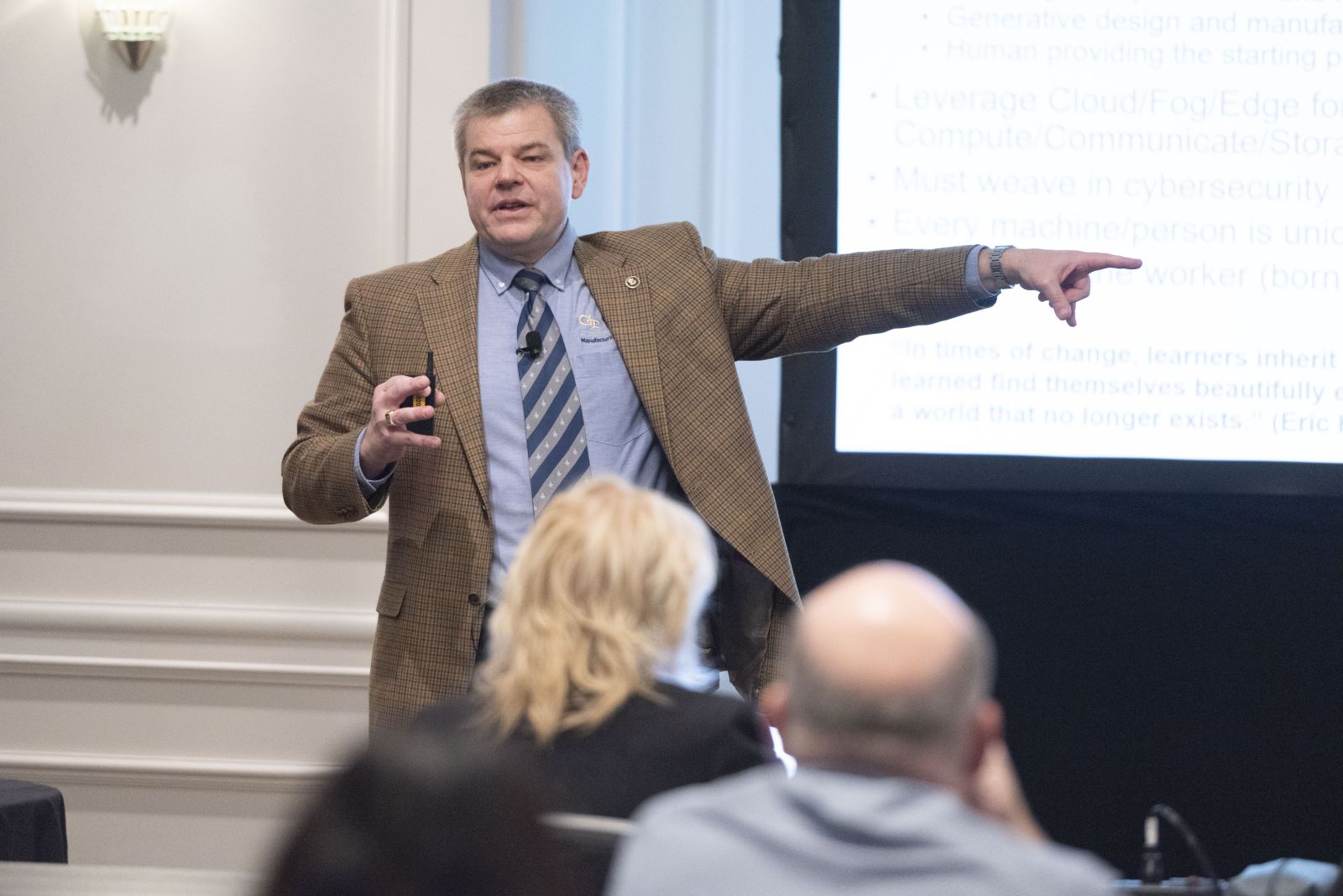
Manufacturing is changing faster than many people realize—and plumbing manufacturers are closer to using artificial intelligence (AI) and advanced digital tools than they may think. That was a central message from Thomas Kurfess, Ph.D., chief manufacturing officer and Regents Professor of mechanical engineering at Georgia Tech, during a presentation at the PMI25 Manufacturing Success Conference.
Dr. Kurfess, who also serves as chief technology officer at the National Center for Manufacturing Sciences, works at the intersection of advanced manufacturing, digital systems, and large-scale production. His message was clear: AI is not a distant, futuristic concept—it is already embedded in modern manufacturing operations, often in simple, practical ways.
Manufacturing at “the speed of thought”
Dr. Kurfess opened by describing the mission of the Georgia Tech Manufacturing Institute as “innovating at the speed of thought.” He explained that developing new technologies is only part of the challenge—scaling them quickly, cost-effectively, and with consistent quality is what determines whether innovation truly has impact. Manufacturing scale, he noted, is essential. Even the best idea will fail to make an impact if it cannot be produced efficiently and reliably.
Sensors, data and processing power
A major driver of modern manufacturing capability is the explosion of low-cost sensors and computing power. Dr. Kurfess described how, decades ago, researchers spent months instrumenting machines and weeks analyzing data. Today, those same sensors are already embedded in production equipment, collecting data continuously.
He pointed out that what once took years of experimentation can now be done in minutes. Modern manufacturing systems generate enormous volumes of data in real time, enabling faster insight and decision-making.
Low-cost devices such as Arduino, Raspberry Pi, and Particle Photon controllers make it easy to build and deploy smart sensing systems. These components are inexpensive, disposable, rapidly upgradeable, and powerful—often more powerful than earlier generations of industrial computing, he stated.
Digital backbones and cybersecurity
Dr. Kurfess discussed how next-generation manufacturing plants are designed around a digital backbone. Rather than machines talking freely to one another, data flows through gateways that manage communication, security and access—reducing cybersecurity risks.
He emphasized that data is essential for AI, but connecting machines indiscriminately creates vulnerabilities. A well-designed architecture prevents a single compromised machine from affecting the entire system.
Cloud computing also plays a role. While some organizations hesitate to store data in the cloud, Dr. Kurfess noted that large providers often offer stronger protection than in-house systems, especially against common threats like phishing and accidental clicks that may open the digital door to bad actors who might deploy malware or ransomware on the company’s systems.
Getting data from legacy equipment
Not all machines are born digital. For older equipment that cannot easily connect to networks, Dr. Kurfess described the use of smart sensors that independently collect and transmit data. These sensors allow manufacturers to modernize data collection without replacing machines.
He stressed the importance of communication standards such as OPC UA and MTConnect. Many companies now require machines that support open standards and provide secure access to process data. According to Dr. Kurfess, this shift has pushed equipment suppliers toward more open, transparent and secure systems.
AI works best in support of people
Throughout the presentation, Dr. Kurfess emphasized that AI works best when it augments human intelligence rather than replacing it. In assembly operations, AI-based vision systems ensure parts are assembled correctly and prevent errors before they happen.
He acknowledged the potential for initial workforce concerns regarding monitoring, but explained that these systems ultimately reduce mistakes, eliminate rework, and make jobs easier and more secure. Once implemented, they improve both quality and job satisfaction.
Additive manufacturing in practice
Dr. Kurfess shared multiple examples of additive manufacturing (also known as 3D printing), including large-scale metal printing, hybrid print-and-machine workflows, and tooling applications. He explained that additive manufacturing requires different thinking—especially around heat, distortion, residual stress, and process sequencing.
In one case, additive manufacturing enabled the rapid production of a large Inconel nose cone for the U.S. Air Force in weeks instead of years. However, he cautioned that new technologies could strain supply chains, as that single project consumed a large share of available material. The use of AI also accelerated the implementation of the new technologies incorporated into additive manufacturing.
Where companies should start
When asked about first steps, Dr. Kurfess pointed to control charts and existing data collection. Many companies already gather quality data manually or automatically. The key is streaming that data into secure systems where it can be shared, analyzed and reused. From there, manufacturers can gradually build toward more advanced analytics and AI applications.
A final thought
Dr. Kurfess closed with a quote from philosopher Eric Hoffer: “Learners inherit the earth.” His message was clear—technology will continue to evolve, and those who keep learning how to use it will be best equipped to succeed in manufacturing’s rapidly changing landscape.
PMI members can log in to view the presentation slides: tinyurl.com/4crzmtnd
This article was drafted with assistance from ChatGPT, with the human author and Dr. Kurfess providing edits, fact-checking, and final composition.
New Board Members Share Enthusiasm for Serving PMI
 By Judy Wohlt, PMI Communications Team, Valek and Co.
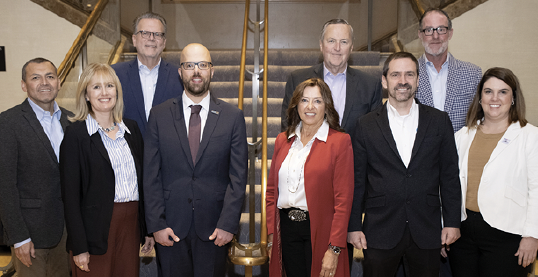
With a shared sense of service, John Confrey and Tim O’Keeffe are looking forward to contributing their unique skills and viewpoints as new members of the Plumbing Manufacturers International Board of Directors. Both see PMI’s advocacy role as more critical than ever, as the regulatory landscape continues to bring new challenges in water-efficiency, packaging, sustainability, and more.
“PMI is here to make sure we have the best and latest information available in a changing world, so that we can continue to lead without market disruption,” explained Confrey, president and CEO of Falcon Water Technologies, and a member of PMI’s Technical and Advocacy and Government Affairs Committees.
As CEO of Symmons Industries, a third-generation family business, O’Keeffe said he wants to contribute to the value PMI delivers to the industry and smaller companies like his. “There may be a lot of challenges ahead, but we’re going to figure it out as a group and do what’s best for our industry and best for the members of this organization,” he emphasized.
Contributing expertise in water-saving tech and sustainability
Confrey and O’Keeffe share a commitment to sustainability and water efficiency, as reflected in their plumbing manufacturing careers—and they’re eager to lend their expertise in those areas.
As a small manufacturer, Falcon has worked hard to develop global expertise in water-saving technologies for commercial restrooms, particularly with water-free urinal systems, Confrey emphasized. “I want to be a representative of that part of the market and demonstrate to the rest of the industry what we all can accomplish with a little agility, especially where water savings are concerned,” he added. “I would love to promote initiatives that help us preserve the world’s natural resources.”
O’Keeffe, who describes himself as a curious innovator, sees opportunities for the plumbing manufacturing industry to further innovate with water-saving technology. For example, he discussed Symmons’ emerging business in building management system technology to manage water. The system uses sensors to collect water usage data, monitor water temperature, and detect leaks; AI enhancements to the system help to quickly resolve issues, he explained.
Staying ahead of increasing regulations, deregulation and other challenges
Both new board members say they’re proud of how PMI advocates for sensible and safe water-efficient plumbing fixtures, codes and standards that protect public health, and a fair and open marketplace. However, they’re concerned about increasing and inconsistent regulations and deregulation that causes additional burdens on plumbing manufacturers.
“The biggest challenge I see for the industry is the specter of a regulation-deregulation-reregulation cycle over the next few years, and the whiplash this will cause if manufacturers have to follow it,” Confrey shared.
This chaotic cycle makes long-term business planning difficult. Deregulation opens the market to unsafe, low-quality and counterfeit products from overseas, potentially giving the plumbing product market a “black eye,” he added. Confrey commended PMI for its advocacy efforts to stop the flow of counterfeit and contraband plumbing products entering the United States and help buyers recognize these unsafe products. “We have the opportunity to demonstrate our strengths as leading plumbing manufacturers by maintaining our high-quality and water-efficient products over this dynamic time,” he said.
O’Keeffe said he’s witnessed over his career an influx of regulations that PMI has adeptly helped manage by rallying PMI members, communicating critical and timely information, and working closely with policymakers.
“In my early days, challenges were more around products. Today, there are just so many different things that are being thrown at us from regulations to potential litigation liabilities,” he said. “PMI adds value by bringing us together to organize around these issues.” O’Keeffe mentioned that when his grandfather made a pressure-balancing shower valve to help people avoid being scalded, he did it to solve a problem—not because a regulatory body required it.
Collaboration—whether with members, the PMI board, or policymakers—is rooted in both Confrey and O’Keeffe’s leadership style. O’Keeffe emphasized that each team member has unique skills and strengths that contribute to an organization’s success. Confrey agreed, saying, “I subscribe to the servant leadership model, meaning I don’t think I know everything. Including multiple perspectives always leads to a better answer.”
Inspiring Water Sustainability in Great Lakes Manufacturing
 By Judy Wohlt, PMI Communications Team, Valek and Co.
The Great Lakes region faces rising water demand from data centers and tech manufacturers, emerging contaminants such as microplastics, and potential federal funding losses. However, bright spots are emerging—such as policy support for industrial water reuse—to create a more sustainable water future in Great Lakes manufacturing.
Joel Brammeier, president and CEO of the Alliance for the Great Lakes, and Alaina Harkness, chief executive officer of Current, discussed these challenges and opportunities during a fireside chat at the PMI25 Manufacturing Success Conference, moderated by Caitlin Looby, Great Lakes and environmental reporter for the Milwaukee Journal Sentinel.
“There’s a perception of an infinite water supply here, but that’s not the case,” Harkness noted. Water reuse incentives and other policies must be used to encourage manufacturers and industry to embrace a sustainability mindset. Federal, state and local public sector entities must make investments as well, she explained during the session “Navigating the Future of Water in Manufacturing.”
Harkness shared her company’s efforts to help. Current, a Chicago-based water innovation hub, is part of Great Lakes ReNEW, a six-state collaboration using up to $160 million in federal funds to invest in a sustainable water future in the Great Lakes—because all our manufacturers and industry depend on water, she explained. In 2025, Current also partnered with mHUB, an advanced manufacturing center in Chicago, to support several companies focused on water sustainability in manufacturing, Harkness said.
Addressing new challenges—with bright spots emerging
While increased water demand and contamination from microplastics and per- and poly-fluoroalkyl substances (PFAS) cause new challenges, policy support for industrial water reuse is gaining momentum.
Data centers, chip manufacturers, and other tech manufacturing are growing in the Great Lakes states and Canadian provinces. “Our region is unprepared for that level of now increasing consumptive use of water,” Brammeier said. However, an important step toward improved sustainability occurred with the proposed Advancing Water Reuse Act (HR 2940), Harkness emphasized. The federal law would introduce a 30% investment tax credit to help manufacturers and data centers fund water reuse projects.
Microplastics have become a concern, too. “Everything that is made with Great Lakes water is being found to contain microplastics,” so we need to understand the sources of this pollution and steps to address it, Brammeier remarked.
Harkness described a “grand challenge” to find new technology that both cleans water and recovers critical minerals. Conventional water and wastewater treatment don’t allow for recovery of valuable resources—such as cobalt, copper and lithium—while leaving behind harmful contaminants like microplastics and PFAS, she explained. Her organization is investing in a “waste to wealth” strategy and research and development to remove PFAS and recover those important minerals, she added.
The Great Lakes Commission recently passed three key resolutions focused on preventing plastic pollution, managing the water and energy demands of AI and computing infrastructure, and promoting non-potable water reuse, Harkness noted.
In August 2025, the Illinois legislature legalized the use of treated wastewater for industrial purposes, she emphasized. “Why is that important? Because this state is banking its future on an influx of water-intensive industry,” she added.
Federal funding loss remains a concern
To deliver clean, safe and affordable water to Great Lakes communities, both Harkness and Brammeier shared the importance of federal funding for water infrastructure, which PMI supports.
Brammeier noted that the region grapples with some of the oldest water infrastructure in the United States. He’s concerned that the federal government may step back from its role as a funding provider and coordinator of water infrastructure activities, he said. At the same time, regional communities face deep income and wealth disparities that can hinder their ability to pay for the necessary long-term wastewater, stormwater, and drinking water projects, he added.
“It’s important for us to be able to drive investment, which I think water-based growth is a good thing in the region—as long as it is done with sustainability at the forefront and with…transparency,” Brammeier emphasized.
Tariffs Remain A Threat to PMI Member Companies
 By Ray Valek, PMI Communications Team, Valek and Co.
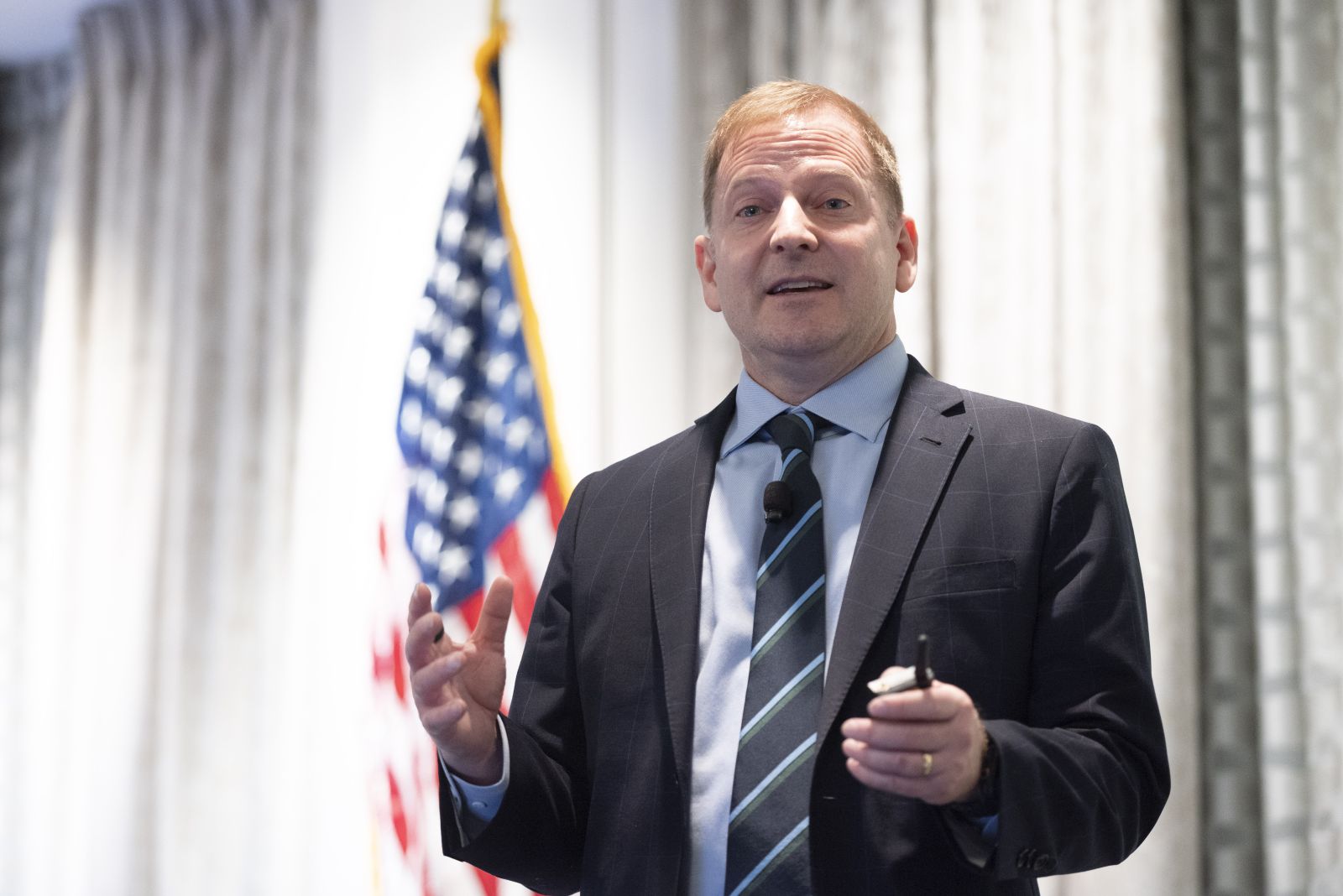
Calling tariffs an “existential threat” to many companies that has become a “C-suite”-level issue, attorney Brooks Allen gave PMI25 Manufacturing Success Conference attendees an overview of the tariffs landscape and the implications it holds for plumbing manufacturers.
A partner at Skadden, Arps, Slate, Meagher & Flom LLP, Allen described the different tariff-related measures currently in place, including anti-dumping and countervailing duties (AD/CVD); section 201, 301 and 232 tariffs; and International Emergency Economic Powers Act (IEEPA) tariffs.
AD/CVDs and section 201 tariffs come into play when importers sell materials below fair value or otherwise undercut United States industries and goods. Section 301 tariffs have been directed toward China by both the Trump and Biden administrations in response to what the U.S. claims to be unfair trade practices or violations of trade agreements, Allen explained.
Three pillars of Trump tariff program
The Trump administration has introduced IEEPA and section 232 tariffs to form what Allen described as the “three pillars of the Trump tariff program”: 1) IEEPA tariffs on Canada, Mexico and China, with the administration claiming the flow of fentanyl across the border is a national emergency justifying the imposition of the tariffs, 2) reciprocal and baseline IEEPA tariffs on about 60 countries, due to the administration claiming that large and persistent annual trade deficits are a national emergency justifying the tariffs, and 3) section 232 sectoral tariffs on various materials such as steel, aluminum and copper, with the administration claiming these imports threaten national security.
Various importers and several states have challenged the IEEPA tariffs, which were imposed by President Donald Trump’s executive orders. Lower courts found that the president exceeded IEEPA authority and issued injunctions. The appeals courts stayed both injunctions and the case now stands before the Supreme Court, with a ruling expected during the first half of 2026, Allen said.
Make your voice heard, take advantage of ways to reduce tariff costs
Section 232 steel and aluminum tariff orders cover derivative products including many items relevant to plumbing manufacturing, Allen stated. The Bureau of Industry and Security added 28 new plumbing-related codes to those subject to section 232 measures—a 27% increase. Allen said these tariffs have been imposed without public hearings and are immune from judicial review. But he encouraged PMI members to reach out to their representatives and regulators on this issue. “There is a huge amount of advocacy going on behind closed doors in Washington on these section 232 investigations,” he emphasized. “And if you’re not out there making your voice heard, bad things can happen.”
For the IEEPA tariffs on Canada, Mexico and China, Allen said importers can take advantage of a key loophole: showing that imported goods are United States-Mexico-Canada Agreement (USMCA) compliant. “That’s been a lifeline,” he stated. With a joint review of the USMCA coming soon, Allen said “the U.S. government has a lot of leverage right now to get what it wants because it has these tariffs. The Sword of Damocles is hanging over the head of Canada and Mexico, (and the U.S. has) got this stick it can beat them with. So the U.S. is probably going to get its way if it’s willing to bargain away some of these tariffs and use them as chips in the joint review.”
Another way to reduce tariff costs is to take advantage of the “first sale rule,” he advised. It works by using the first sale price between the manufacturer in China and distributor in Hong Kong, for example, rather than the marked-up price between the distributor and the importer in the U.S. “When you apply it to complex intercompany transactions… it can make a huge difference, but you have to do it right,” he stated.
Be mindful of tariff stacking and enforcement, as well as contract language
Allen also cautioned PMI members that these various tariffs can add up or be “stacked.” Using the example of a stainless steel flange from China, Allen said this good often used in a plumbing product may be subject to a general duty rate, plus section 301 and 232 tariffs, an IEEPA tariff, and AD/CVD for a total tariff of 431.8%. “So we’re definitely going to think twice before we import this good,” he stated.
The Department of Justice is stepping up enforcement of tariff evasion, Allen warned. “The penalties can be pretty significant here. I don’t want to scare anybody, but I do want people to be aware that the enforcement environment has changed and is very different from where we were in the Biden years.”
If the Supreme Court rules against the legality of the IEEPA tariffs, this action could trigger large-scale refunds of duties paid by importers, Allen said. In past rulings, the court has embraced the “major questions doctrine” on issues such as student loans. The plaintiffs argue that the IEEPA statute says nothing about tariffs and doesn’t grant the administration the right to levy them. However, he doesn’t expect Trump to take a ruling against tariffs lying down. “He and his team have already said that they will look for ways to put other tariff programs in to fill the vacuum,” Allen stated.
The right to refunds may depend on contract terms between importers, retailers, and end customers. If contracts are silent or ambiguous, common law and unjust enrichment principles may require that refunds be passed on to those who bore the economic burden. “That’s why it’s so important in contracts to have provisions that deal with what happens when there is a tariff increase,” he explained.
PMI members can log in to view Allen’s presentation slides: tinyurl.com/4crzmtnd
This article is not intended as legal advice. Companies should seek legal counsel specific to their needs and situation.
PMI Members Virtually Tour Chicago’s Water Infrastructure
 By Judy Wohlt, PMI Communications Team, Valek and Co.
Chicago’s world-famous water infrastructure has transformed the once-polluted Chicago River into a healthy, thriving waterway. To make these improvements, the city has implemented measures including reversing the river’s flow away from Lake Michigan, implementing a combined sewer system for rain and sewage, and applying water quality monitoring through methods such as electrofishing.
Justin Brown, senior public affairs specialist, Metropolitan Water Reclamation District (MWRD) of Greater Chicago, shared this progress with a slide tour of Chicago’s water infrastructure at the PMI25 Manufacturing Success Conference.
MWRD treats wastewater and manages stormwater for the Chicago area. “You could say that we manage the large-scale plumbing downstream of residences and commercial properties, and even downstream of smaller municipal sewer systems,” Brown emphasized.
Reversing the river flow to protect Lake Michigan
Over the last century, MWRD has upgraded the city’s vast sewer system, which used to dump raw sewage into the Chicago River. Before the river’s flow was reversed, this sewage polluted Lake Michigan—the region’s water supply source. Today, Chicago’s rivers are some of the most scientifically studied in the world as a living laboratory for waterway restoration, Brown noted.
In the early 20th century, MWRD built pilot plants to develop wastewater treatment technology along with intercepting sewers to move sewage to cleaning facilities, Brown explained. Today, hundreds of miles of intercepting sewers move wastewater to seven treatment plants, where 1.2 billion gallons are processed daily. The Stickney plant, MWRD’s largest plant—and one of the largest sewage treatment plants in the world—can treat a million gallons a minute, he noted.
Bathroom wipes used as toilet paper—which PMI and its members have advocated against—became a modern-day problem, so MWRD built bar screens into the system to remove the wipes. “We have an ongoing campaign to encourage people not to flush so-called ‘flushable’ wipes,” he said.
A combined system carries rainwater and sewage
Chicago employs a combined sewer system that carries both rainwater and sewage. Cities around the world use Chicago’s proven deep tunnel system design to protect their rivers, Brown noted.
Even with a plant that can treat a million gallons of water a minute, the area sometimes takes on more water than the system can clean during large rainstorms, he explained. When that happens, there is a risk of the sewer system overflowing to the river and polluting it, as well as an increased chance of flooding.
Chicago’s Tunnel and Reservoir Plan (TARP) is designed to catch that water in about 110 miles of tunnels that flow to three large reservoirs, where the water is held until after the rain passes. Then, the water is pumped back to MWRD’s plants to be cleaned. To date, this system has captured over one trillion gallons of combined sewage that would have otherwise gone into the river, Brown shared.
Changing weather patterns have challenged the system. “We’re seeing more intense rainfall over short periods of time, and we could use maybe another couple tunnels in some cases,” Brown stated.
Cleaning wastewater with aeration and monitoring with electrofishing
MWRD cleans Chicago’s wastewater using aeration, while employing electrofishing to monitor the health of aquatic life and water quality. Aeration encourages the growth of aerobic bacteria that thrive in the presence of oxygen and consume pollutants from the water, Brown explained.
Electrofishing monitors the river’s health. An electrofishing boat electrically charges the water, which stuns the fish, causing them to float to the surface. Field technicians move the fish to a larger research boat, where they are weighed, measured, identified, and released back into the river, Brown explained.
Historical data show great improvements in the river’s overall health with an increasing and diverse fish population, he added. Using an online water quality mapping tool, MWRD also provides detailed water quality data from the early 1970s to the present.
PMI members can log in to view Brown’s presentation slides covering “Deep Tunnels, Backwards Rivers and Electrofishing: Chicago’s Water Infrastructure” on the PMI website “post-event resources” page (tinyurl.com/4crzmtnd).
Join PMI Market Outlook LIVE on Feb. 12
 Join us on Feb. 12, 1-2:30 p.m. CT, for the next PMI Market Outlook LIVE: “The ITR Economics’ Outlook for 2026 and Early 2027,” a timely and insight-packed webinar featuring senior forecaster Connor Lokar. All employees of PMI member companies are welcome to attend as a benefit of PMI membership.
While 2026 is opening with a mild rising trend, ITR Economics’ leading indicators suggest that momentum may fade for some industries in the second half of 2026 and into 2027. For plumbing manufacturers, understanding when and where those changes may occur can be the difference between reacting too late—or acting with confidence.
Why attend?
- Anticipate economic shifts impacting GDP and industrial production—and align your strategy accordingly.
- Manage risk proactively by preparing for potential volume slowdowns and rising costs.
- Plan investments wisely, from capital expenditures to staffing and inventory decisions.
- Gain a competitive edge by adapting earlier than competitors who wait for confirmation.
- Identify industry-specific vulnerabilities, so you know which sectors are most likely to falter—and which may hold firm.
The ability to anticipate weaker periods and plan ahead is often what separates companies that merely survive from those that thrive through the cycle.
About Connor Lokar
Few economists deliver economic intelligence with the authority, accuracy, and humor of Connor Lokar. A sought-after keynote speaker and trusted advisor, Lokar is known for his quick wit and storytelling. He translates complex economic data into clear, actionable insights leaders can use immediately. As ITR Economics’ senior forecaster, he brings a deep understanding of how forecasts are built—and how to apply them effectively in real-world strategic planning.
If your organization is making decisions that will impact 2026 and beyond, this is a presentation you don’t want to miss. To participate on Feb. 12, register today at tinyurl.com/2p9t9vhc. A recording of the presentation will be available on-demand to PMI members after that date.