

November/December 2025
Let’s Continue to Shape the Future Through Our Leadership
 By Belinda Wise, PMI Board of Directors president, Neoperl US
Together, we have built something extraordinary. The story of plumbing fixture and fitting manufacturers over the past year is one filled with undeniable challenges but with resilience and unstoppable progress. We have never just kept pace with change—we have led it. And as we look ahead, our mission is clear: to shape a future that not only meets today’s needs but anticipates tomorrow’s wants and opportunities.
As I near the close of my term as your president, I feel an incredible sense of gratitude—and pride—in what we have carried out together. Serving in this role has certainly been one of the greatest honors of my professional career.
First, let me extend a heartfelt thanks to my colleagues on the Plumbing Manufacturers International Board of Directors and the PMI staff—thank you for your partnership, your wisdom, and your commitment. What you do behind the scenes on behalf of the industry is outstanding. To our committees and task groups—you are the engine that powers this association. And to our members—thank you for trusting me with this opportunity to serve and for investing your time, energy and resources into PMI. None of what we do is possible without your active engagement.
When I began my term, I spoke about the importance of leadership grounded in service. Over the past year, I have had the privilege of seeing that principle in action repeatedly, by PMI and through the work at our individual member companies. Whether it was tackling tough regulatory issues, advancing our technical leadership, giving to charitable causes, or strengthening our advocacy presence in Washington and the states, our association has shown what’s possible when competitors come together as collaborators for the good of our industry. It especially warmed my heart to stand side by side with you as we built kits for World Vision after our membership meeting this year—THANK YOU to all who participated!
I am especially proud of how we have continued to expand PMI’s influence. Our partnerships—whether across North America or beyond—are proof that plumbing manufacturers not only build amazing products but also help shape policy, embrace sustainability, and support innovation worldwide. We are seen as thought leaders and trusted problem-solvers, and that is because of the work of every single one of you.
Of course, it has not been about only policy and strategy. What makes this association special are the relationships—the chance to learn from one another, share challenges, and celebrate successes together. That spirit of collaboration is what sustains us, and I know it will carry PMI into an even brighter future.
As I pass the gavel to our next president, Bob Neff of Delta Faucet Company, I do so with confidence. Confidence in our leadership team, confidence in our members, and confidence in the direction we are headed. Our industry is resilient, innovative and future-focused—and so is PMI.
I also want to thank my colleagues at Neoperl for their unwavering support and embrace while I was engaged with PMI business this past year. I know 2025 has been a challenging year with very busy days, but you’ve always given unquestioned support. I remain very impressed with how hard you all work to grow the business.
Thank you again for the privilege of serving as your president. It has been a truly rewarding experience. I look forward to continuing to support the work of this great association in the years to come.
The State of PMI is Strong, Thanks to Your Partnership and Trust
 By Kerry Stackpole, FASAE, CAE, IOM, PMI CEO/Executive Director
2025 was a year of meaningful progress, collective action, and strategic positioning for the future of our industry. I’m privileged to share with you this State of the Association Report. During this concluding year, there were five areas of key importance and concern to our industry.
- Advocacy and policy leadership
This year, PMI once again proved the power of proactive engagement in policy and regulation. In our 2025 Annual Report, we emphasized that “finding common ground” is our approach in debates over trade policy, water-efficiency standards, and supply-chain pressure. We successfully advocated for the restoration of 100% bonus depreciation for U.S. manufacturers starting January 2025, securing a key tool for reinvestment in domestic manufacturing capacity.
We also amplified our voice in the fight against counterfeit and contraband plumbing products by having the U.S. Senate declare July as National Anti-Counterfeiting and Consumer Education and Awareness Month and partnering with member companies, the Consumer Protection Safety Commission, and media channels to highlight safety risks to consumers and damage to trusted brands in the marketplace. - Technical and industry-standards progress
Our technical work remains a strength of PMI. We advanced the next chapter of our “Rethink Water” initiative by focusing on the critical issue of “Responsibly Managing Building Plumbing Systems,” helping policymakers and stakeholders understand how fixtures, drains, valves and piping must function as an integrated system—not in isolation. Through collaborative research and data-sharing, we equipped members with insights into water-use modeling, legacy product replacement programs, and lifecycle performance of fixtures—making our collective case stronger and more credible. - Member engagement, diversity and workforce development
We formally launched the Women of PMI initiative in 2025—creating a fresh platform to highlight, support and connect the women of our member companies. The program offers networking, leadership development, and recognition. We expanded our professional development programs—offering workshops on P&L literacy, virtual leadership, and retention strategies—recognizing that innovation comes from empowering talent at all levels. - Public awareness, industry value and sustainability
Our communications strategy has sharpened PMI’s message that “safe, responsible plumbing” underpins public health, water security, and everyday life. Our messages were reinforced across major media and trade channels. The 2025 PMI Annual Report highlighted how our member companies’ efforts contribute not just to business success—but to societal infrastructure and environmental stewardship. Examples from you—our members—reflect our commitment: from advancing water-saving technologies to investing in workforce and community initiatives. These real-world stories matter. - Looking ahead: strategic priorities for 2026
As we move into the next chapter, PMI will focus on three interconnected priorities:
- Strengthening our united industry voice—across borders and across advocacy, trade, regulation, and standards; ensuring that plumbing fixture and fitting manufacturing stays competitive, resilient, and globally aligned.
- Driving innovation and workforce readiness—through tools, training and technology that prepare our membership for the challenges of digital transformation, artificial intelligence, sustainability, and evolving customer needs.
- Enhancing membership value—by delivering practical, timely resources; benchmarking insights and research; and collaborative forums where members can learn and lead together.
No success happens without you
In 2025, PMI did more than respond to change—we helped shape it. None of these successes happen without your leadership, your engagement, and your commitment to shared purpose. As manufacturers, you build the systems, products and solutions that matter. As members of PMI, you strengthen our collective voice and our ability to deliver impact.
Thank you for your partnership and your trust. Together, we will continue building an industry that is innovative, resilient and indispensable—for our businesses, our customers, and the communities we serve. Thank you, again—for all that you do.
New PMI Board President and Members Approved at PMI25
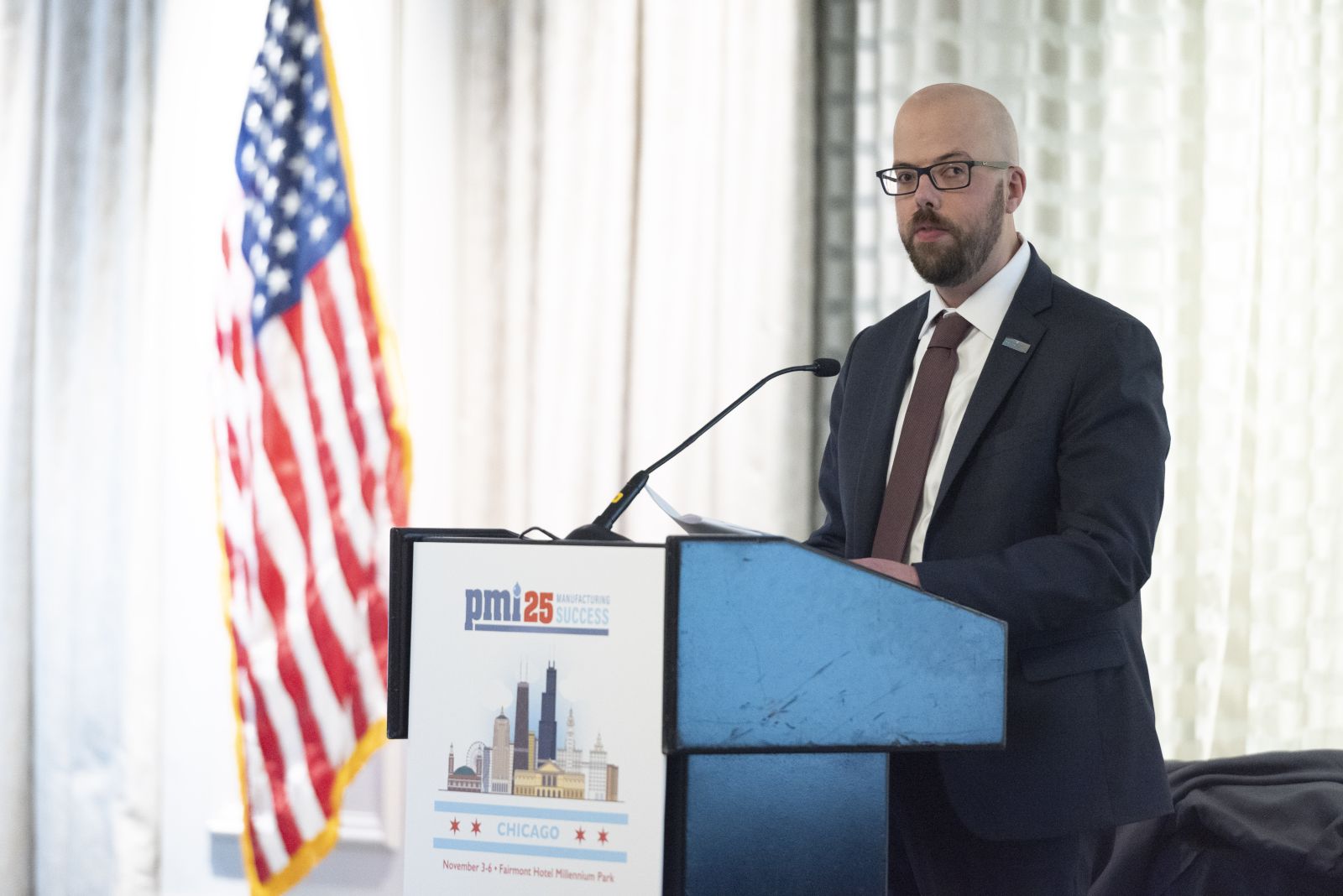 Plumbing Manufacturers International members elected Bob Neff as president of the 2026 PMI Board of Directors during PMI’s 71st Annual Meeting of the Membership in November. An enterprise product compliance and regulatory manager for Masco Corporation and Delta Faucet Company, Neff succeeds Belinda Wise, a Neoperl US board of directors member. Wise will remain on the board as immediate past president. The meeting was held during the PMI25 Manufacturing Success Conference in Chicago.
In addition to Neff and Wise, the members of the 2026 board will be board vice president Lowell Lampen, Kohler; board secretary/treasurer Paige Riddle, LSP Products; and at-large directors Troy Benavidez, LIXIL; John Confrey, Falcon Water Technologies; Tim O’Keeffe, Symmons Industries; and Kate Olinger, Uponor-GF Building Flow Solutions.
Neff recognized Wise for her contributions as the 2025 PMI board president. Neff also announced that the 72nd Annual Meeting of the Membership will be held as part of the PMI26 Manufacturing Success Conference from Nov. 2-5, 2026, at the Loews Hotel in New Orleans.
Wise presented the PMI President’s Award to Stephanie Salmon, PMI federal government affairs representative. PMI CEO/Executive Director Kerry Stackpole named Dan Rieland of Kohler as the recipient of the PMI Ambassador Award.
At the end of the meeting, attendees assembled World Vision hygiene kits, which will be distributed to children, women and men in need. To be distributed by World Vision, the kits include essential hygiene items and handwritten messages of encouragement from PMI members. The Nov. 3-6 PMI25 meeting earlier featured the presentation of the Paul Patton PMI25 Manufacturing Success Award to Mike Johnson, manager, product compliance and regulatory affairs, Delta Faucet Company.
Chief ‘Soul Officer’ Delivers Helpful Advice to Women of PMI
 By Judy Wohlt, PMI Communications Team, Valek and Co.
Shelley Paxton had ticked the box of earning a C-suite role as Harley-Davidson’s chief marketing officer, appearing to be the picture of success. However, as she pushed herself and prioritized work over everything else, she wound up in crisis mode—feeling exhausted, empty and alone.
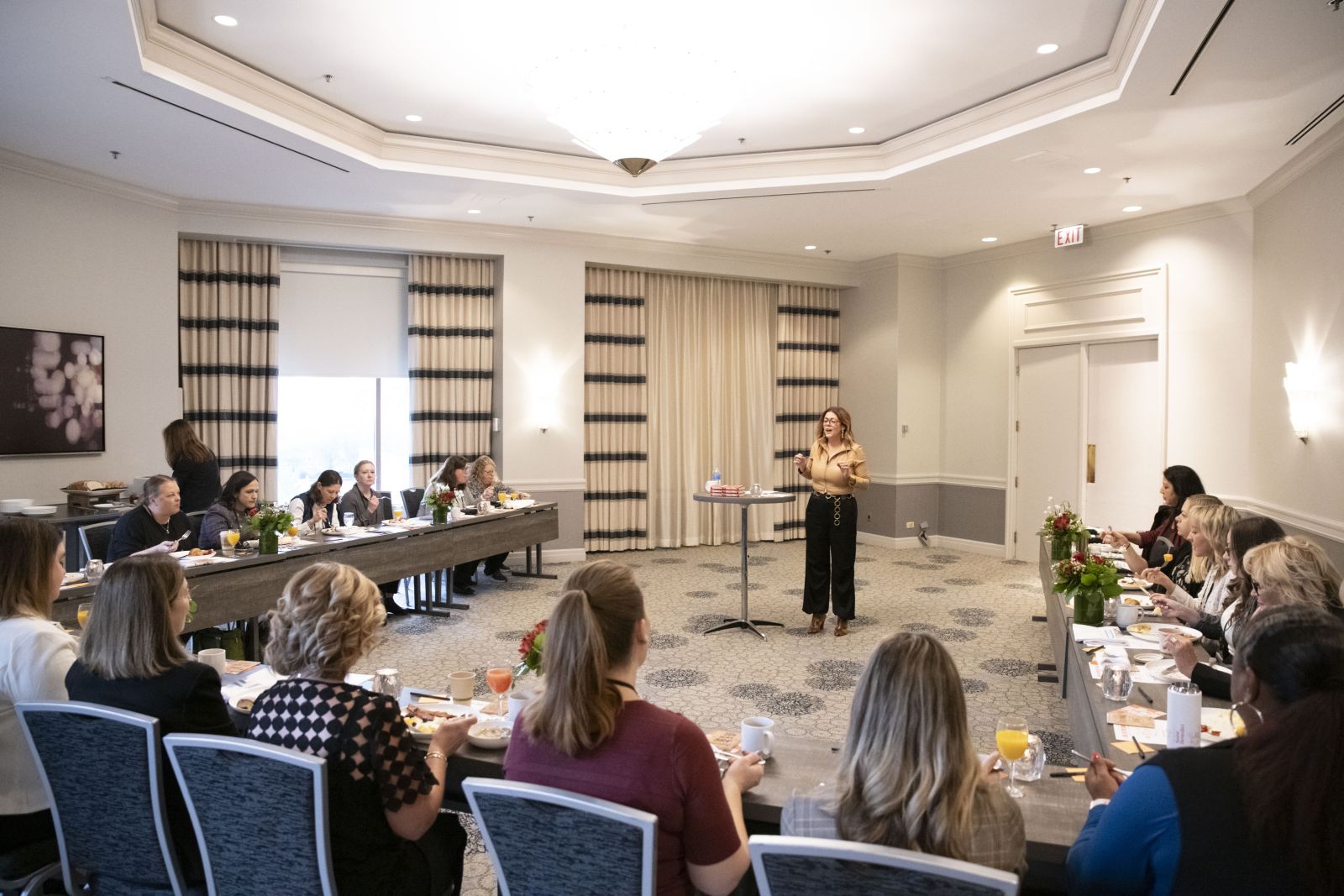
That wakeup call led to a total life and work revamp, which Paxton turned into a business helping leaders and teams redefine success and reshape organizational cultures to celebrate humanity, wellbeing and soul. She shared exercises and tools developed from her experience to beat burnout and to “show up more bold, brave and badass in life and leadership” during her Women of PMI Breakfast presentation, “I Quit So You Don’t Have To: Flipping the Script from Success-EMPTY to Success-FULL.” The breakfast was held during the PMI25 Manufacturing Success Conference in November.
“I think a lot of us are taught from a young age that success looks a certain way,” noted Paxton. Perhaps it’s taking the path our parents did, chasing juicy titles and promotions that will finally make us feel happy, or making ourselves available at all hours for our bosses, team and family. “But man, what they don’t tell us is that we can do all those things, and if they’re not aligned, they leave us feeling empty instead of full,” she emphasized.
Releasing the ‘shackles of should’
The “shackles of should” are the beliefs, conditioning and expectations of others that we prioritize above our own truth, value and wellbeing, Paxton explained. To release these shackles, you need to give yourself permission to rebel for what makes you feel “alive, aligned and fulfilled,” she suggested.
Simone Biles, winner of seven Olympic gold medals for gymnastics, famously demonstrated this mindset by permitting herself to withdraw from the 2021 Tokyo Summer Olympics to protect her wellbeing, shared Paxton, author of the book, “Soulbbatical: A Corporate Rebel’s Guide to Finding Your Best Life.” As the media and many others questioned Biles’ decision, “she showed us what it was like on a global stage to release the shackles of should,” Paxton stated. “We all know the rest of her story. She took a beat, trained, and came back more powerful than ever and dominated the 2024 Paris Summer Olympics.”
Giving permission to show up as your most powerful self
Paxton shared a “permission slip” exercise with attendees, inviting them to get honest about what they want and need to “show up powerfully” in their lives and leadership. She shared three “permission themes” to help them get started: 1) permission to choose values over validation; 2) permission to choose boundaries over balance; and 3) permission to choose pause over push.
Your values will become the filters and criteria for how you want to live your life, so start there and create three, she suggested. Paxton’s values are authenticity, courage and freedom. She believes so strongly in them that she has “authenticity” tattooed on her forearm. “It reminds me to show my truth,” she said.
Her second theme focuses on choosing boundaries over balance. Throughout her adult life, she thought she had a solid idea of her boundaries. “I realize now they were like sandcastles at high tide. They had no chance whatsoever because they weren’t grounded in my truth and I see that now,” she noted.
She juxtaposed boundaries against the idea of balance. “I personally believe that balance is BS. I think it is a word that sets us up for failure—especially women,” she said. “It suggests that we can do everything, that we should do everything, and it’s not true. We can’t. We need to make decisions.”
The third permission theme—choosing pause over push—is also known as permission to flip the time-off script. “Time off is not a payoff for hard work. It is a prerequisite for smart, energized, creative, inspired work and leadership. Period,” she emphasized. Giving yourself permission to pause may be five or 10 minutes every morning to “get quiet” or write yourself a few permission slips, Paxton added.
She invited attendees to bring this leadership style back to their teams and organizations to “change the culture together.”
PMI25 Executive Panel Talks Customers and Innovation
 By Judy Wohlt, PMI Communications Team, Valek and Co.
Top plumbing manufacturing leaders explored how rapid shifts in technology and customer expectations are opening new doors for innovation at the PMI25 Manufacturing Success Conference in November. They also shared insights on how to lead with vision and focus in a fast-paced business environment
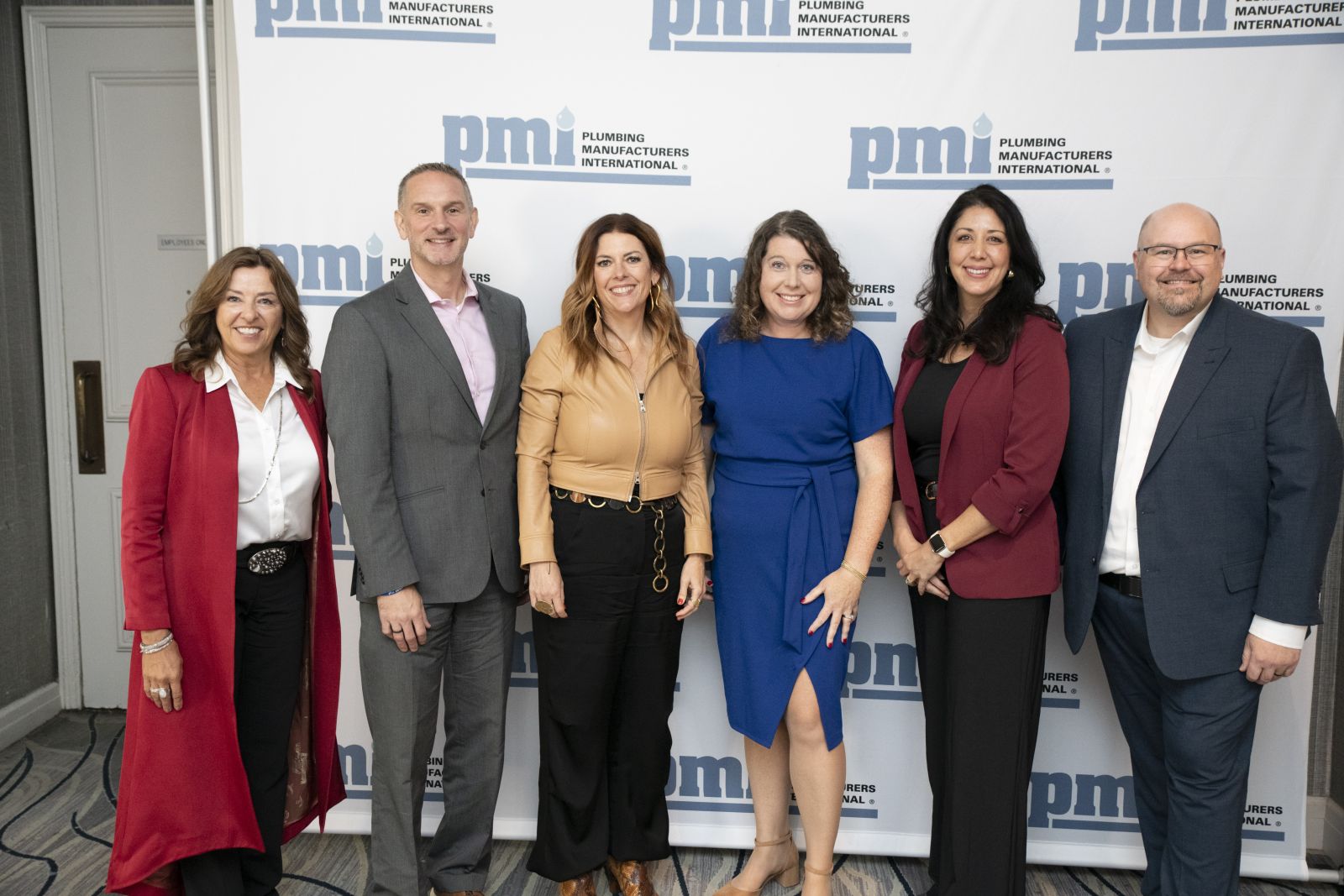
Shelley Paxton, who earlier was the featured Women of PMI Breakfast speaker, moderated a special “Industry Leaders Panel Discussion” that included Erin Beyer, senior vice president, product, Delta Faucet Company; Bob Downie, president and CEO, Duravit America; Carmen Fiordirosa, president, Gerber; and Shawn Oldenhoff, senior vice president, category management, kitchen and bath Americas, Kohler. Beyer, Downie and Oldenhoff serve on the PMI Strategic Advisory Council.
Paxton summed up the industry’s current state as “navigating the tensions of pressure and possibility.” Beyer noted how the accelerating pace of business and technology has impacted customers. “So, we’re seeing that come through with their expectations for the experiences with our products in terms of faster, smarter, more convenient, personalized,” she emphasized.
Four generations of customers have created a complex landscape
Plumbing manufacturers must satisfy four generations of customers—baby boomers, Generation X, millennials, and Generation Z—who have drastically different expectations around product value, technology, trust, and experience.
“It’s a complicated time. We are working, living and consuming as four demographics across the board, that have four unique needs,” Fiordirosa said. For example, baby boomers and Gen X generally value durability and brands they trust, while seeking an in-person customer service experience. “So, we have to cater to them as manufacturers and brands,” she noted. Meanwhile, digitally native millennials and Gen Z often want transparency and sustainability wrapped into a brand’s business model, she added.
The generations who grew up on technology seek connected products that interact and provide data to provide a personalized experience, Beyer explained. “Yet, you still see the importance of durability, quality and design rooted in brands that care about the environment. So, we have to marry engineering and durability with innovation and digital, while keeping core sustainability. That’s the challenge,” she said.
New opportunities may be hiding in old product ideas, Oldenhoff suggested. “We may need to try some of those ideas again because, now, the technology has caught up to it. Just because we tried something five or 10 years ago doesn’t mean we shouldn’t go after it and try it again,” he emphasized.
Another challenge plumbing manufacturers face is the speed with which the next generation of customers will make purchasing decisions. Some customers may give you only 15 or 20 seconds online to persuade them to purchase your plumbing product, Downie shared. “Simplification, transparency to who you are as a brand, whether or not that includes an ESG strategy—you need to be forward and communicative on the value you’re providing, your story, and the why,” he added.
Creating a culture of experimentation and trust to support innovation
Leaders must cultivate curiosity, cross-functional collaboration, trust, and a culture of experimentation—where it’s okay to fail, learn and start again—to support innovation.
“Possibility only becomes progress when people feel aligned and supported and given the permission to innovate,” Beyer stated. To learn, people need room to experiment and make mistakes. “It isn’t failure if you’re learning,” Oldenhoff stated. The best solutions arise from cross-functional thinking, where they’ve been explored from different angles and perspectives—from engineering, design, marketing, and other functions, he added.
Building a culture of trust means encouraging excellent communication, being vulnerable as leaders, and “owning our own mistakes,” Fiordirosa noted. “Leaders need our teams. We don’t have it all figured out. Please, communicate with us,” she added.
Panelists also shared insights on successfully leading with focus and vision during extreme change.
“When you have the chaos going on around us of policy, tariff and customer sentiment changes, you have to take a moment and ask, ‘What can I control? How can I contribute? What’s the biggest problem to solve?’ And go about solving and working on that and boil it down to its smallest component,” Oldenhoff stated.
“Intense pressure forces you to prioritize,” Fiordirosa emphasized. “Out of pressure and time come diamonds.”
Award-Winning Filmmaker Shares Leadership Lessons at PMI25
 By Judy Wohlt, PMI Communications Team, Valek and Co.
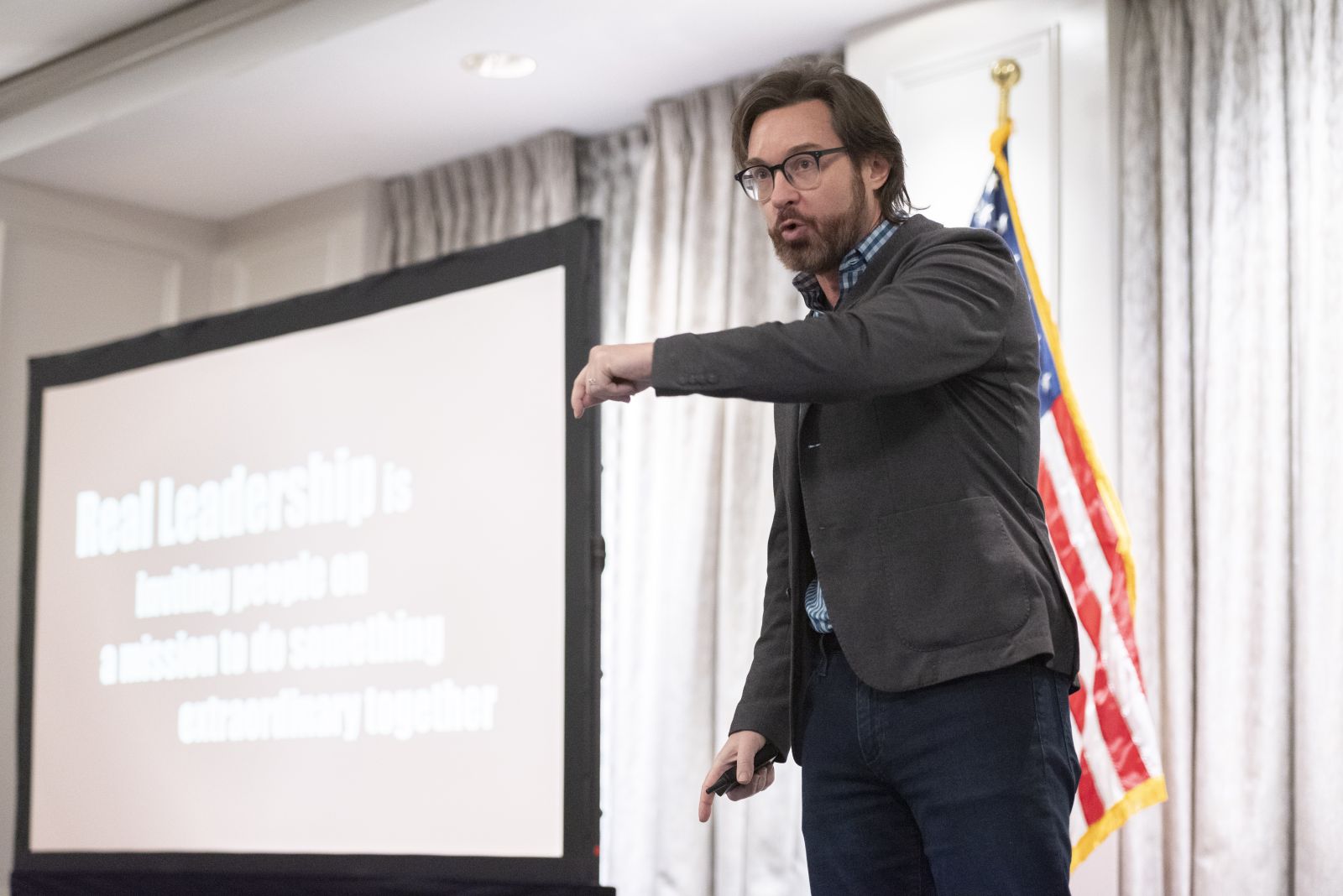
“Real leadership is inviting people on a mission to do something extraordinary together,” award-winning filmmaker Brett Culp told attendees of the PMI25 Manufacturing Success Conference in November. During his keynote, he shared his professional storytelling and leadership tips on adopting an “empowerment mindset,” setting aside ego and having the courage to care.
Culp’s career as a documentarian, known for the films “Legends of the Knight” and “Look to the Sky,” has focused on ordinary people who have accomplished extraordinary things. “They believed, because they had vision, because they had hope, and that changed my life and changed the way I saw leadership,” he said. “Leadership is about framing your work as a mission. Stay anchored to your meaningful mission…and you can sail through any storm.”
He described Plumbing Manufacturers International and its members as “extraordinary” and on a “noble quest” to work together to provide clean, safe water for generations to come. Arriving a day early for PMI25, Culp filmed several PMI members sharing their insights on what’s happening in the plumbing manufacturing industry and wove their remarks into his presentation.
Tapping into an ‘empowerment mindset’
When Culp realized that “people are not a problem to be solved, but a force to be unleashed,” he saw that everyone has the opportunity and capacity to embrace leadership and make an impact. This “empowerment mindset” is crucial to building connection and trust, he noted.
“What great leaders do is see that positive capacity, that sense of possibility and potential within every person, and then do what they can to unlock it,” he emphasized. This requires trust so that your team feels like you have their backs if they make a mistake. “When we shift to a mindset that is more about mentoring or coaching, it opens up a sense of possibility,” he added.
Influence comes from being a trusted advisor—not from being the person with the most power in your email signature, Culp said. “You know who that person is in your organization, and it doesn’t matter what their title is,” he continued.
Tell compelling stories to drive positive actions and embrace change
The stories you generate create a culture that forms an identity which then drives behavior, Culp emphasized.
“How strategic are you being with cultivating the story you want for your organization, for your world, for your life? Once you have that anchored grounding in your story…, you start to be able to look at change differently. Rather than change being a threat, you can embrace it with boldness,” he stated.
Kate Olinger, a member of the PMI Board of Directors and director of industry and regulatory affairs at PMI member company Uponor-GF Building Flow Solutions, shared her thoughts on storytelling via a video clip from Culp. “The plumbing industry sometimes is a little humble. We need to tell our story because there’s a lot of good stuff going on,” she said. “Everyone I meet in the plumbing industry wants the best for everybody, wants people to have clean water. And I think that’s the story we want to stick with, because I think it’s something everyone can get behind. Without it, we’re all in a lot of trouble.”
Set aside ego to achieve success
Culp described a “transformational moment” when he eliminated pride and ego in his work. “I started to attract new partners, new opportunities, and new connections,” he stated.
For example, he discussed a film project to show “the real heart and energy” of young people in Haiti. However, his first set of images showed everyone looking “stiff and shut down,” he said. As he was loading his truck to move on, he noticed the same kids dancing and singing in the street after being dismissed from school. He joined them, attempting to sing the song and match their intricate moves. His translator said the students asked that he return to the school the next day. By being vulnerable and acting silly, Culp connected with the kids and captured the images he needed.
PMI Advocates for Members On High-Stakes Issues
By Ray Valek, PMI Communications Team, Valek and Co.
During their PMI25 Manufacturing Success Conference presentation, PMI government affairs consultants Jerry Desmond and Stephanie Salmon provided an overview of legislative and regulatory issues on which PMI is advocating for PMI members.
Maximum toilet flush rates in California
Desmond reported on the status of the California Energy Commission’s consideration of lowering maximum allowable flow rates on toilets from 1.28 gallons per flush (gpf) to 1.1 gpf for single-flush toilets and from 1.28 gpf to 1.28 gpf (full flush) and 0.8 gpf (reduced flush) for dual-flush toilets.
PMI continues to oppose this change due to health and safety concerns, advocating instead for the replacement of high-flow toilets with ones meeting the current flush rate standard, especially since only 23% of California residents have toilets that meet the standard. However, should these recommendations become effective, CEC staff has agreed to an 18-month to two-year lead time for implementation, a manufactured-on date versus a sold-by date in the regulations, and engagement in the code development process, Desmond explained.
Corporate climate reporting, PFAS, EPR and building codes in California
Desmond reported on potential exemptions and on litigation challenging the California climate law. Shortly after PMI25, the Ninth Circuit Court of Appeals paused the enforcement of Senate Bill 261, including the requirement to meet a Jan. 1, 2026, climate disclosure reporting deadline, while the lawsuit filed by a coalition led by the United States Chamber of Commerce remains on appeal.
After Gov. Gavin Newsom vetoed a bill that would have banned PFAS in four specific products, various California agencies continue to consider various ways to mitigate the presence of PFAS in the environment. The Circular Action Alliance has been approved to serve as California’s first producer responsibility organization (PRO) for plastic pollution prevention and extended producer responsibility (EPR). While California has placed a moratorium on new building codes until 2031 due to the fires, some exemptions do exist, including one for reducing potable water use in new residential buildings, Desmond said.
Federal lawmakers tussle on tariffs, housing and water efficiency
With the federal government reopening, key voting on a continual resolution will likely occur in January 2026. While various tariffs and other Trump administration actions are being rolled back by Congress or the courts, other bipartisan measures such as the ROAD to Housing Act of 2025 are gaining traction. Advanced by the Senate Banking Committee by a 24-0 vote, this bill directly supports converting underused office/commercial space into residential projects, Salmon said.
Remaining on the Trump administration agenda is the rollback of water-efficiency standards. After hiring legal counsel, PMI submitted comments on the Department of Energy’s proposal to amend water-efficiency standards for faucets and commercial pre-rinse spray valves. PMI comments challenged the proposal, stating that it would harm PMI members and American manufacturers by undermining 30 years of investment in water-efficient products and by providing competitive advantage to foreign manufacturers. PMI noted that many states would continue to require their current, lower flow rates. PMI’s comments also said the DOE’s actions were unlawful, citing the anti-backsliding provision of the Energy Policy and Conservation Act (EPCA), as well as a lack of evidence and authority, Salmon explained.
Other actions relating to water efficiency include the introduction of the Saving Homeowners from Overregulation With Exceptional Rinsing (SHOWER) Act and the Don’t Mess With My Home Appliances Act. The first bill sets the definition and flow rate of a showerhead at 2.5 gallons per minute, even if more than one nozzle is included in a showering unit. The second bill provides a roadmap for the DOE to revoke or amend an energy conservation standard. PMI has recommended amending the bill language to clarify that only standards in place less than five years can be petitioned for amendment or revocation, and only if manufacturers are given three to five years to adapt products to the marketplace and the flood of imports, Salmon stated.
EPA, PFAS and USMCA
Over at the Environmental Protection Agency, the number of employees decreased from 16,155 at the start of 2025 to 12,448 in July due to early retirements, buyouts and other reductions. While the EPA retreated from plans to end the Energy Star program, the agency is facing proposed fiscal year 2026 budget cuts ranging from 7% as proposed by the Senate bill to 23% as proposed in the House bill. These cuts will affect State Revolving Funds and the Water Infrastructure and Innovation Program. The WaterSense Program remains in place for now, and EPA is starting to implement a series of PFAS-related changes, Salmon explained.
The joint review process of the United States Mexico Canada Agreement (USMCA) has begun. The United States Trade Representative has a report due to Congress by Jan. 2, 2026. After gaining input from members, PMI submitted comments that urged three priorities: maintain and strengthen U.S. trade ties to Canada and Mexico, secure a renewed commitment to full compliance with the USMCA, and fix technical barriers with NOM-002 and NOM-012 standards, which do not recognize other North American standards and result in duplicative testing and certification in Mexico, Salmon said.
To review the slides from this presentation, PMI members can log in and go to tinyurl.com/4crzmtnd
Economist Expects Slow, Cautious Growth in 2026
 By Ray Valek, PMI Communications Team, Valek and Co.
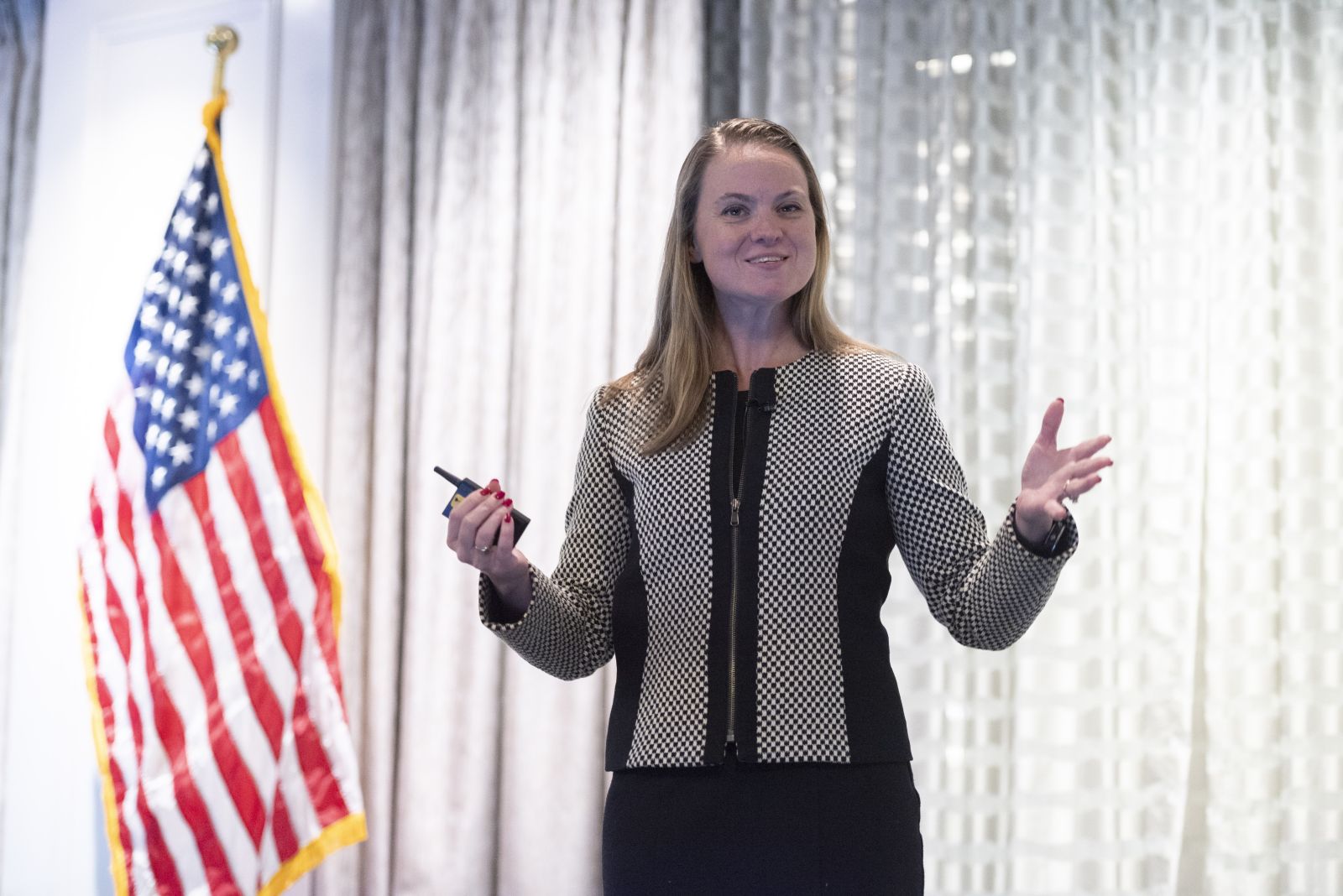
Lauren Saidel-Baker of ITR Economics presented a picture of slow, cautious growth in her presentation, “Gearing Up for 2026,” at the PMI25 Manufacturing Success Conference in November.
Driving economic optimism in the United Sates are strong consumer finances and lowered interest rates. However, uncertainty caused by tariffs, nationalism, and current relations with foreign governments are dampening this optimism, she explained. “The business cycle is slowly improving. We still have a stable consumer. But this is not the growth that we’ve become accustomed to in the past couple of cycles,” Saidel-Baker stated.
The uncertainty has likely peaked, she explained, as businesses tire of it and decide they need to move forward. “I call it ‘uncertainty fatigue’…We can’t sit on the sidelines indefinitely,” she said.
Consumer spending remains strong
As businesses move forward, they can borrow money, at a higher rate than they would like, and achieve retail sales at a rate that is outpacing inflation, Saidel-Baker said. She pointed out the disconnect between surveys reporting pessimistic consumer expectations and data showing strong consumer spending.
Specifically within the United States wholesale trade of hardware, plumbing, and heating equipment and supplies, growth is up 6.8%, or $253 billion, year over year. Part of that growth percentage is due to inflation. “But even if we were to deflate that number, there is low single-digit growth. There is positivity happening in this market overall,” she explained.
Inflation, interest rates tick lower but can possibly go back up
Inflation is ticking back down under 3%, she explained. “Prices are still rising, but they’re rising at a much slower, more manageable pace,” she stated, with banks considering 2% inflation optimal. But Saidel-Baker said there’s a chance inflation will turn back up into the 3-4% range in 2026 due to factors including worker wages, tariffs, electricity prices, and commodities such as crude oil, lumber, iron, steel, and aluminum. She added that inflation within the plumbing products sector is already picking up.
The threat of inflation is influencing decisions on interest rates. “There’s a lot of divergence amongst Fed members right now,” she explained. “Some are saying, ‘We need to cut and cut hard and keep cutting to protect the labor market.’ And others are saying, ‘Hey, not so fast’…If we start to see the CPI (consumer price index) picking up, if we start to see broad inflation pressures, not only that one-time step up in tariff-related costs. . . I wouldn’t be surprised if at the tail end of next year we start talking about them going back up again.”
She said mortgage rates will likely settle into a new normal of 5.5-6.5%, depending on the length of the note. More concerning are data showing deficits in the annual income required to afford an average-priced home. These deficits are as high as $156,684 in Hawaii and $123,850 in California. Only two states—Louisiana and West Virginia— show income surpluses. Still, Saidel-Baker expects housing starts to regain their footing in 2027 while vacancies in multiunit housing remain low. She expects accelerating growth in the multi-tenant retail, office, warehouse, education, and hospital sectors during 2026.
Consider regional opportunities for sales, labor
With population growth occurring in many southern and western states, mostly notably Florida and Texas, Saidel-Baker encouraged PMI members to consider regional opportunities, both in sales and to find labor. Nationwide, there is one unemployed worker for each available job, but with specific skills needed for many positions, filling an opening can be challenging, she stated. The crackdown on undocumented workers is harming the construction and agriculture industries the most. Saidel-Baker said she expects countries including the U.S. to be competing for immigrants within a few years, as most have more individuals retiring than those entering the workforce.
With tightness in the labor market expected to be a long-term trend, she advised PMI members to hold on to their talent—and to expect a 29% rise in labor costs through the rest of the decade. She also encouraged members to ignore the political noise and to invest in ways to differentiate from competitors.
She emphasized the many reasons to bring production back to the United States, no matter what happens with tariffs. “We’ve seen a long-term shift to re-onshoring, near-sourcing. That is not new with tariffs. That has been going on for a decade now,” she explained. “Because until very recently, we’ve had cheap energy, plentiful natural gas. We have the best and brightest here. We have the tech that can do it. So there are many reasons to do business in the U.S.”
To review the slides from this presentation, PMI members can log in and go to tinyurl.com/4crzmtnd.